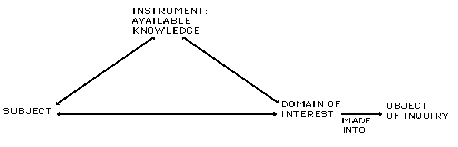
In the preceding chapters, I have formulated the object of my investigation in terms of expansion from the level of prevalent individual actions to the level of novel collective activity. Such transitions have commonly taken place as if above the heads of the affected individuals and groups, in the form of historical tragedies and puppet shows of varying scales.
I have argued that a new type of 'learning by expanding' is emerging in the current phase of human history. This implies that the transitions mentioned above are becoming potential objects of conscious or intuitive mastery.
Conscious goal-directed processes are situated on the level of actions, or secondary instruments. This level is the homestead of thinking. Thinking is most typically described as a series of relatively discrete actions of 'gap filling' or problem solving. The emergence of thoughtfully mastered learning activity or 'learning by expanding' implies the extension of thinking into an activity, and the merger of learning and thinking into one unified process on this level.
The problem is to identify the specific instruments of this new type of expansive learning and thinking. For this purpose, I shall first critically examine certain dominant modes of theorizing about thinking.
In his book The Foundations of Primitive Thought, C. R. Hallpike (1979) defines the characteristics of 'primitive' and 'advanced' thinking as follows (Table 4.1; compiled by Atlas 1985, 336).
Table 4.1
Characteristics of 'primitive' and 'advanced' thought after Hallpike (1979)
___________________________________________________________________
Type of thought
'Primitive' 'Advanced'
Domain of thought
Symbolism image-based, affective linguistic
Classification associational taxonomic
Number and
measurement concrete, absolute abstract, relative
Space perceptual conceptual
Time qualitative, quantitative, capable of
incommensurable comparison
Conceptions and fusion of the psychical mind/body duality;
representations of and physical; private distinction between private
the person states not verbally and public awareness
elaborated
Causality essentialist impersonal, probabilistic
___________________________________________________________________
Hallpike uses the Piagetian cognitive stages as his analytical framework. According to him, inhabitants of 'primitive' societies are for the most part characterized by preoperational thought, not reaching the level of concrete operational thinking typical to children of seven years and older living in 'advanced' societies.
For Hallpike, life in 'primitive' societies is cognitively less demanding than life in 'advanced' societies. One source of higher cognitive demands in 'advanced' societies is the presence of mechanical devices and complex technical implements. Substitutability of labor, impersonal productive relations and the rationalization of activity are the features of civilization celebrated by Hallpike. As Atlas (1986, 335) notes in his review, Hallpike's book echoes old mainstream ideas on 'primitive' mentality. The novelty is his wedding of Piaget to this tradition.
The form of theorizing demonstrated by Hallpike is deeply rooted in our psychological reasoning. It is salient in many current discussions of the psychology of human thinking, including attempts with aims opposite to those of Hallpike's. This general form of theorizing is the pervasive use of dichotomies as explanatory constructs.
In his pioneering study of the cultural foundations of cognition, A. R. Luria (1976) distinguished between two broad types of thinking: one concrete, situational and 'graphic-functional', the other abstract, categorical and logical. The protocol of a subject called Rakmat, produced as a response to a classification task, is a famous example of the former type.
"Subject: Rakmat., age thirty-nine, illiterate peasant from an outlying district; has seldom been in Fergana, never in any other city. He was shown drawings of the following: hammer - saw - log - hatchet.
'They are all alike. I think all of them have to be here. See, if you're going to saw, you need a saw, and if you have to split something you need a hatchet. So they're all needed here.'
Employs the principle of 'necessity' to group objects in a practical situation.
(...)
Which of these things could you call by one word?
'How's that? If you call all three of them a 'hammer,' that won't be right either.'
Rejects use of general term.
But one fellow picked three things - the hammer, saw, and hatchet - and said they were alike.
'A saw, a hammer, and a hatchet all have to work together. But the log has to be there, too.'
Reverts to situational thinking.
Why do you think he picked up these three things and not the log?
'Probably he's got a lot of firewood, but if we'll be left without firewood, we won't be able to do anything.'
Explains selection in strictly practical terms.
True, but a hammer, a saw, and a hatchet are all tools.
'Yes, but even if we have tools, we still need wood - otherwise, we can't build anything.'
Persists in situational thinking despite disclosure of categorical term." (Luria 1976, 55-56.)
Luria's schooled subjects behaved differently. To them, the task of isolating a particular attribute as a basis of categorization seemed "a natural, self-evident procedure" (Luria 1976, 78). These schooled subjects actually represented a historical phase entirely different from that represented by Rakmat. Rakmat was a man of a pre-industrial and pre-literate age. The schooled subjects were men and women of socialism and industrialization in the takeoff.
Luria's conclusions imply that concrete situational thinking is something lower or less developed than abstract categorical thinking. This has prompted Cole and Griffin (1980, 352) to note that the qualitative changes in cognition that Luria sought to demonstrate led him into comparisons "that were distressingly quantitative in their implications".
The problem is: can development be conceived of as a linear process where certain valuable ingredients (such as the 'abstractness' of thinking) gradually or abruptly increase while other, restrictive ingredients (such as the 'concreteness' of thinking) decrease? The answer given by Cole and Griffin is negative. While being forced to admit that technologies have evolved from the simple to the complex and more powerful, they point out that in spheres like politics or family life such linear evolutionary schemes are inappropriate (Cole & Griffin 1980, 362).
The justified opposition to linear schemes easily leads to a denial of all logic or lawfulness in history. The result may be a pluralistic ahistorical constructivism along the lines of Nelson Goodman's (1978) 'worldmaking'. The idea that anything may be constructed from what is given and that no constructed world is instrinsically more true than any other is refreshing and spiritually liberating. But it is not very powerful in the face of the overwhelming movement of societal reality. And it helps us very little in our attempts to understand how our societies have evolved.
So Luria's weakness is not the same as that of Hallpike's who presents his dichotomy in essentially ahistorical terms. Luria's dichotomy is an attempt to understand historically the transformation of thinking. It is precisely this that makes Luria's study a pathbreaking classic. Luria's trouble is on a different level. It is a question of what is the logic of history - if it is not linear.
THE SECOND DICHOTOMY: EXPERIENCE VERSUS ANALYSIS
Hallpike's dichotomy sees the concrete thought of the 'primitive' societies as something essentially lower than the abstract thought of the 'advanced' societies. Some recent treatises take a different standpoint, actually praising the neglected virtues of various forms of concrete, tacit and non-analytical thought (though not necessarily connecting these forms with so called 'primitive' societies).
In their book Mind over Machine (1986) Hubert and Stuart Dreyfus discuss the nature and acquisition of expertise in the era of the computer. Their argument is that we cannot explain human expertise as behavior based on explicable principles and rules. A true expert makes decisions on intuitive basis. The psychological mechanism behind intuition is experience-based wholistic recognition of similarity, producing deep situational understanding and fluid, rapid behavior. Through experience, we store in our memories large amounts of typical situations which bear no names and defy complete verbal description: "experience seems immeasurably more important than any form of verbal description" (Dreyfus & Dreyfus 1986, ....).
"While most expert performance is ongoing and nonreflective, when time permits and outcomes are crucial an expert will deliberate before acting. But (...) this deliberation does not require calculative problem-solving, but rather involves critically reflecting on one's intuitions." (Dreyfus & Dreyfus 1986, ....)
The authors describe the process of becoming an expert as consisting of five stages of skill acquisition (Table 4.2).
Table 4.2
The five stages of skill acquisition after Dreyfus & Dreyfus (1986)
__________________________________________________________________
Skill level Components Perspective Decision Commitment
1. Novice context-free none analytical detached
2. Advanced beginner context-free and " " "
situational
3. Competent " chosen " detached understanding
and deciding; involved
in outcome
4. Proficient " experienced " involved understanding;
detached deciding
5. Expert " " intuitive involved
__________________________________________________________________
The acquisition process is depicted as a linear sequence from the analytical to the intuitive, from the rule-guided 'kowing that' to the experience-based know-how. It is essentially a process of internalization.
"An expert's skill has become so much a part of him that he need be no more aware of it than he is of his own body." (Dreyfus & Dreyfus 1986, ....)
The process is not only linear. For the authors it also seems to be automatic and self-evident in every case of expertise acquisition. Experience is the golden key to the consequtive steps of this path.
This assumption fails to explain why so many people never become fluid intuitive experts in spite of years and years of experience. Somehow the authors seem to forget all about the rigidity associated with extensive routinization.
The Dreyfus brothers' singular praise of experience may be contrasted with the findings produced over the years by research on learning from experience in probabilistic situations (see Brehmer 1980; Kahneman, Slovic & Tversky 1982).
Brehmer (1980, 224-227) points out the weakness of the psychological research supposedly demonstrating how people learn from experience. The tasks used in that kind of research, such as paired associates and classification tasks, typically employ materials where the truth is manifest. In the word lists of paired associates the subject immediately knows what he is supposed to learn. Similarly, in the classification tasks the common components of the stimuli, such as color and form, are already well formed concepts and the experimenter is certain that the subjects already have the hypotheses relevant to the task. Thus, the guarantee of the validity of the solution in these tasks does not come from experience. It comes from the experimenter through his choice of materials.
"The paradigm may thus very well model the situation in teaching, where the teacher decides for the pupil what the truth should be in a given case, but it certainly does not model the situation in which a person is learning from experience." (Brehmer 1980, 225.)
The situation is different when subjects face complex probabilistic tasks, such as diagnostic decision making. The truth is not manifest. Nobody tells the practitioner what there is to learn, or even whether there is anything for him to learn. The fact that the chosen treatment leads to recovery does not mean that the decision was correct, for (a) the recovery may have had other causes, (b) other kinds of treatment might have been equally or more effective, and (c) the chosen treatment may eventually have other unwanted effects which are, however, difficult if not impossible to trace back to their cause with full certainty. Even if the chosen treatment works, the explanation for why it works may be very different from what the practitioner thinks it is. But the practitioner learning from experience learns mainly from the outcomes of his actions. As Dreyfus & Dreyfus (1986, .....) put it, "the proficient performer has experienced similar situations in the past and memories of them trigger plans similar to those that worked in the past".
"When we learn from outcomes, it may, in fact, be almost impossible to discover that one really does not know anything. This is especially true when the concepts are very complex in the sense that each instance contains many dimensions. In this case, there are too many ways of explaining why a certain outcome occurred, and to explain away failures of predicting the correct outcome. Because of this, the need to change may not be apparent to us, and we may fail to learn that our rule is invalid, not only for particular cases but for the general case also." (Brehmer 1980, 228-229.)
Mere experience, even of probabilistic tasks, seems only to strengthen the subjects' non-pobabilistic thinking. Subjects prefer to assume that there is a deterministic causal rule behind every task. When their assumed deterministic rules fail, they tend to assume that there is no rule at all, rather than seriously consider the possibility that the rule may be probabilistic in character.
"These results, then, support the earlier results on clinical inference in that they show that people do not learn optimal strategies from experience even if they are given massive amounts of practice. The reason why the subjects fail to improve in these tasks seems to be that they lack the necessary basic schemata to help them understand and use the information provided by their experience. Rather than using the appropriate statistical schemata, subjects use an inappropriate causal or deterministic shema. (...) The characteristic of probabilism is, of course, not manifest, but it has to be inferred. (...) for a person with a firm belief in the deterministic character of the world, there is nothing in his experience that would force him to discover that the task is probabilistic and to give up the notion of determinism. (...) In short, probabilism must be invented before it can be detected." (Brehmer 1980, 233-235.)
The problem with learning from experience is actually the classical problem of induction. According to the classical theory of induction, we make generalizations on the basis of experiencing many things of a similar kind. Dreyfus and Dreyfus (1986, ....) seem to subscribe to the classical position: "through practical experience in concrete situations with meaningful elements, which neither the instructor nor the learner can define in terms of objectively recognizable context-free features, the advanced beginner starts to recognize those elements when they are present". And this happens "thanks to a perceived similarity with prior examples".
This kind of empirical generalization seems to work reasonably well when we are dealing with simple stimuli and well established conventions. But when the cases we observe are complex and novel, how do we know that things are really similar and instances of the same general class? For that, we need to know what the relevant characteristics are in the first place. We have to define what we are to learn before we can learn it. Pure induction turns out to be a fallacy, as Nelson Goodman demonstrated long ago.
"To say that valid predictions are those based on past regularities, without being able to say which regularities, is thus quite pointless. Regularities are where you find them, and you can find them anywhere." (Goodman 1983, 82.)
What we commonly think is pure experience is actually sense data selected and interpreted by our culturally molded but not necessarily modern schemata and mental models. Probability calculus was invented in the seventeenth century, perhaps because "it was only at this point in time that the notion of causality had reached such a level that it could provide a suitable contrast against which to evaluate disorder" (Brehmer 1980, 235). In individual practitioners, the old cultural model of linear causality has tremendous persistence. This illuminates the conservatist bias of experience. Recalling the Dreyfus brothers' unreserved belief in the power of experience, Brehmer's (1980, 224) conclusion that we have come to have "a perverse conception of the nature of experience" is not unfounded.
The Dreyfus brothers' dichotomy is experience-based intuitive expertise vs. rule-based analytical expertise. Employing Brehmer's critique of experience, we obtain a further dichotomy: experience as casual growth of wholistic intuition vs. experience as strengthening of rigid and biased routines. So we are still stuck with a dichotomy.
One final version of the dichotomy deserves our attention. It is the split between scientific and artistic, or paradigmatic and narrative thought, recently revitalized by Jerome Bruner (1986).
According to Bruner (1986, 12), the paradigmatic or logico-scientific mode of thought attempts to fulfill the ideal of a formal, mathematical system of description and explanation. It employs categorization or conceptualization and the operations by which categories are established, instantiated, idealized, and related one to the other to form a system. Propositions are extracted from statements in their particular contexts. The logico-scientific mode deals in general causes, and in their establishment. It makes use of procedures to assure verifiable reference and to test for empirical truth. Its language is regulated by requirements of consistency and noncontradiction.
The narrative type of thought has opposite characteristics.
"The imaginative application of the narrative mode leads instead to good stories, gripping drama, believable (though not necessarily 'true') historical accounts. It deals in human or human-like intention and action (...). It strives to put its timeless miracles into the particulars of experience, and to locate the experience in time and place. (...) The paradigmatic mode, by contrast, seeks to transcend the particular by higher and higher reach for abstraction, and in the end disclaims in principle any explanatory value at all where the particular is concerned." (Bruner 1986, 13.)
Bruner's book is a continuation of a distinguished series on essentially analogous dichotomies: science vs. humanities; nomothetic vs. idiographic; concepts vs. images; positivism vs. phenomenology. In psychology, the same basic division was championed already by Wundt.
Many recent efforts to deal with these dichotomies aim at balancing or combining the two sides. In his important book on Imagery in Scientific Thought, Arthur I. Miller (1984, 312) concludes that "when scientists hold a theory, they hold a particular mode of imagery as well". Herbert Simon (1983, 28) joins the credo by stating that there is no contradiction between the intuitive model and the behavioral model of thinking, since "all serious thinking calls on both modes, both search-like processes and the sudden recognition of familiar patterns". In his theory of fantasy, Roset (1984) presents the two sides as alternating phases of intuitive production and analytical control, or 'anaxiomatization' and 'hyperaxiomatization'.
These combinations leave us with constructions of the type 'both-and' instead of mere 'either-or'. But the abstract dichotomous structure remains at the heart of the argument.
The problem with the dichotomies is that they depict movement as mechanical opposition, summation or oscillation between two fixed poles, thus effectively excluding the dimension of concrete historical development.
'Either-or' and 'both-and' are closed and timeless structures. Within them, there is no room for something qualitatively new emerging first as a subordinated mediator between the two poles and being transformed into a determining factor that will eventually change the character of the whole structural configuration. There is no room for thirdness.
In classical treatises on the psychology of thinking one finds, however, intriguing attempts to overcome the dichotomous structure. My first example is John Dewey's (1910) How We Think. In this book, Dewey takes up the problem of experience. He first criticizes our belief in experience much in the manner Brehmer did it 70 years later.
"But even the most reliable beliefs of this type fail when they confront the novel. Since they rest upon past uniformities, they are useless when further experience departs in any considerable measure from ancient incident and wonted precedent. (...)
Mental inertia, laziness, unjustifiable conservatism, are its probable accompaniments. Its general effect upon mental attitude is more serious than even the specific wrong conclusions in which it has landed. Wherever the chief dependence in forming inferences is upon the conjunctions observed in past experience, failures to agree with the usual order are slurred over, cases of successful confirmation are exaggerated. Since the mind naturally demands some principle of continuity, some connecting link between separate facts and causes, forces are arbitrarily invented for that purpose." (Dewey 1910, 148.)
But Dewey is not satisfied with this. He realizes that people may also become truly flexible and inventive experts. This kind of development is based on experimentation and hypothesis testing. But that in turn cannot be explained as something given from above, mechanically separated from experience. Thus, experience acquires a deeper double meaning.
"In short, the term experience may be interpreted either with reference to the empirical or the experimental attitude of mind. Experience is not a rigid and closed thing; it is vital, and hence growing. When dominated by the past, by custom and routine, it is often opposed to the reasonable, the thoughtful. But experience also includes the reflection that sets us free from the limiting influence of sense, appetite, and tradition. Experience may welcome and assimilate all that the most exact and penetrating thought discovers. Indeed, the business of education might be defined as just such an emancipation and enlargement of experience." (Dewey 1910, 156.)
The external opposition of experience versus analysis has thus been transformed into an internal contradiction within experience itself. But the mediating thirdness is still lacking.
To find the way out, we must take a critical look at the logic implicitly attributed to both components of experience, or to both intuitive and analytical thinking. Max Wertheimer's Productive Thinking (1945) is a classical work which provides us with this critique.
"There are several objects. (The way in which they are segregated, and why just so, how an object constitutes itself in separation from other objects, is a question neglected in traditional logic, is taken for granted without real investigation.) I compare them. In their qualities of their parts I find similarities and differences. Abstracting from the differences, and concentrating on common qualities or parts in the objects, I get a general concept. The content is given by these common parts. This is the 'intension.' The 'extension' is the manifold of objects embraced by the class concept.
If we call the common element m, and the other elements x, an exact expression for the class (or for any object as conceived under the class concept) is
m + x.
Between the m and the x is an 'and.' The m is what is common in the contents of the objects; the x is what there is besides the m and may vary in the contents of the various objects. The conceived datum, m, is independent of its setting to the left and right, and apparently must be so for the sake of exact use of the concept in inference, syllogisms, etc. There is no reference to whatever else there may be in the object besides, no references to the role which m plays in this object, no reference to its meaning as a part among the other parts of the same entity, no reference to the structure of this entity. This abstraction is substractive; it simply isolates the m. For the m it does not matter what the x is. (...)
In the historic development difficulties have arisen as to the adequacy of the procedure (...). The problem was whether such a procedure, although exact, does not easily combine objects which are basically different in nature and, on the other hand, sharply separate objects which belong to each other in fact. The logician seeks help in the term 'essential.' There always was emphasis on this point; but although for common sense the meaning of 'essential' is often clear enough, unfortunately it was and has remained extremely controversial in logic. It has served to name the problem rather than to solve it. It has consequently been rejected again, excluded in newer developments of logic." (Wertheimer 1945, 207-208.)
Another grave feature in traditional logic is its insistence that the items of discourse - concepts, propositions, etc. - must remain rigidly identical if repeated. In real thinking processes, items do not remain identical. To the contrary, precisely their change is required. Their functional and structural meaning changes, and blindness to such change impedes productive processes. Formal logic is incapable of grasping development because it disregards "the intense directedness of live thought processes as they improve a given situation" (Wertheimer 1945, 215).
This fundamental insight has long been neglected in cognitive and anthropological studies of classification. A recent study of the conceptual organization of practicing blacksmiths indicates that the emphasis may be changing. "What leads to highly effective means of blacksmithing is flexibility in classification. There is no one basic structure to which we can turn as the key to the practice of blacksmithing. Blacksmithing, like other behavior, is characterized by productivity." (Dougherty & Keller 1985, 170-171; see also Gatewood 1985.)
Wertheimer (1945, 10) concludes that in comparison with actual thought processes, the rules and examples of traditional logic look "dull, insipid, lifeless". If one tries to describe processes of productive thinking in terms of formal logic, one may have a series of correct operations but the sense of the process, what is vital and creative in it, is lost.
One factor behind the persistence of formal-logical conceptions of thinking is their correspondence to certain deep-seated modes of real thought processes. The outstanding instance is our habit to proceed only successively, step by step, in an 'and-summative' fashion. According to Wertheimer (1945, 88), this may be due to the fact that "we cannot write down two propositions simultaneously, that in reports we have to proceed one thing after the other". In other words, the concrete-historical instrument of written language enters as a structural determinant of thinking. Unfortunately Wertheimer does not continue this line of analysis. It remains an intriguing hint, a sidetrack without consequence.
For Wertheimer, there is something essential behind the endless multitude of external properties of objects. This essential includes the following aspects:
- the wholeness or whole-quality of the object or situation, as opposed to a mere additive listing of its parts;
- the clear, complete and consistent structure of the object, as opposed to an incomplete or shallow structure;
- the inner relatedness of the parts of the whole, as opposed to their separation or discreteness;
- the center, core or radix of the whole, as opposed to a stuctrue without center.
The essential is thus the 'good gestalt', and productive thinking is transition from a bad gestalt to a good one. Wertheimer summarizes his idea in the following description.
"Thinking consists in
envisaging, realizing structural features and structural requirements; proceeding in accordance with, and determined by, these requirements; thereby changing the situation in the direction of structural improvements, which involves:
that gaps, trouble-regions, disturbances, superficialities, etc., be viewed and dealt with structurally;
that inner structural relations - fitting or not fitting - be sought among such disturbances and the given situation as a whole and among its various parts;
that there be operations of structural grouping and segregation, of centering, etc.;
that operations be viewed and treated in their structural place, role, dynamic meaning,
including realization of the changes which this involves;
realizing structural transposability, structural hierarchy, and separating structurally peripheral from fundamental features - a special case of grouping; looking for structural rather than piecemeal truth." (Wertheimer 1945, 190-191.)
For a modern cognitive scientist, characterizations like the one cited above are aggravating, if not totally meaningless. It is hard to find tangible operational, not to speak of measurable, counterparts or indices for Wertheimer's concepts. For Wertheimer, this kind of reaction would rather prove his point, being another example of the dominant piecemeal, and-summative way of thinking.
It is not justified to nullify Wertheimer's work on account of its lacking concreteness. Wertheimer does present a very convincing series of concrete examples, ranging from the famous parallelograms to the unique account of Einstein's way to the discovery of relativity. In these examples, he demonstrates how productive thinking proceeds. But he does not demonstrate what primary and secondary instruments could be used to enhance this type of thinking. Obviously this is why gestalt theory was overrun by the many variants of behaviorism. Skinner offered the world concrete tools with which one could do something practical. Wertheimer did not.
This criticism could be interpreted as crude utilitarianism. But there is more at stake here. The question of instruments is above all a theoretical weakness in Wertheimer's work. As I noted earlier, he only accidentally touched the role of cultural instruments - namely written language - as determinants of the development of thinking. He did not seek the expansive perspective by way of a historical analysis of the emerging new instrumentalities of thought. His conception was presented as an unhistorical, eternal solution. Productive thinking, aimed at the 'good gestalt', was for him a moral imperative, something stemming from inside, being already planted deeply in the human nature: "in humans there is at bottom the desire, the craving to face the true issue, the structural core, the radix of the situation" (Wertheimer 1945, 191). Thus, at least implicitly, the emergence of productive thinking was something to be realized by individual willpower.
And yet, in spite of this critical weakness, there is something prophetic in Wertheimer's vision of thinking as expansion.
"In such processes of thinking the solution of an actual task, 'Problem solved, task finished,' is not the end. The way of solution, its fundamental features, the problem with its solution function as parts of a large expanding realm. Here the function of thinking is not just solving an actual problem, but discovering, envisaging, going into deeper questions. Often in great discoveries the most important thing is that a certain question is found. (...)
Often such a process takes a long time; it is drama with setbacks and struggles. There are fine cases in which the process proceeds irresistibly, through months, through years, never losing sight of the deeper issue, never getting lost in petty details, in detours, bypaths." (Wertheimer 1945, 122-123.)
So Wertheimer gives us prophecy, but not instruments. To get some idea of the latter, I'll consult a third classic, namely Sir Frederic Bartlett's book Thinking (1958).
According to Bartlett (1958, 182), much of what is called inductive generalizing is "no more than the acceptance, with biased selection, of already formed social conventions". These generalizations "have little to do with transfer of practice or training save that they make it more difficult" (Bartlett 1958, 184).
There is, however, also an exploratory or experimental type of generalization which may lead to genuinely new discoveries and concepts. But even this is not accomplished by 'purifying' the sensory data from cultural conventions. To the contrary.
"However 'pure' his aims may be he has to be able to practise a technique and to handle a technology. Far the most important aspect of the experimenter's need to master method and to handle apparatus is that in the majority of cases (...) the method and the instrumentation are brought into his field of work from the outside." (Bartlett 1958, 133.)
Why are instruments so important in experimental thinking? Successful experimenting requires that the experimenter knows where to look for new crucial findings. This step becomes possible when apparatus, methods, hints, or established findings are taken over from some field different from that in which they are applied. They subsequently function as 'lenses' that allow for a novel perspective. (Bartlett 1958, 134.)
Bartlett's insight has recently been restated by Tweney, Doherty and Mynatt (1981, 411-412).
"Scientists self-consciously bring a store of knowledge to bear on the task at hand, as well as a highly developed set of intellectual tools. They may use extensive note-taking, carefully organized records of data, files, and libraries, as 'external memories.' They use blackboards, mathematics, even formal logic. Latour and Woolgar (1979) noted that nearly all of the behavioral activity in a major laboratory consisted of manipulation of symbols, and only a tiny fraction involved direct contact with the phenomena under investigation. Cognitive psychologists have typically studied 'prescientific man.' The typical subject in a psychological laboratory has access only to presented stimuli and almost never to memory aids or other heuristics. The intent has been to study basic cognitive processes, unencumbered by cultural artifacts or aids. A cognitive psychology of sciencewill have to focus instead on aided cognition, on the psychology of scientists when all the tools of the trade are at their disposal."
However, the above statement falls short of grasping the gist of Bartlett's idea. For Bartlett, the specific instrumentality of exploratory thinking implies also its specific sociality. The sociality of experimental thinking is not of an immediate, face-to-face nature (though it may certainly include that, too). The necessity of taking over instruments from other, overlapping fields means that experimental thinking is "fundamentally co-operative, social, and cannot proceed far without the stimulus of outside contacts" (Bartlett 1958, 123).
This is a specific extended kind of sociality. It indicates the expansive, cyclic nature of experimental thinking. According to Bartlett (1958, 136), when any experimental science is ripe for marked advance, a mass of routine thinking has come near to wearing itself out by exploiting a limited range of technique to establish more and more minute and specialized detail.
"However, at the same time, perhaps in some other branch of science, and perhaps in some hitherto disconnected part of what is treated as the same branch, there are other techniques generating their own problems, opening up their own gaps. An original mind, never wholly contained in any conventionally enclosed field of interest, now seizes upon the possibility that there may be some unsuspected overlap, takes the risk whether there is or not, and gives the old subject-matter a new look. (...)"
This passage takes us back to Figure 3.2. The phase of repetitive production of more and more specialized detail precedes the phase of the need state, or the primary contradiction. The phase where a new instrument is seized upon and taken over from an overlapping field corresponds to the emergence of the secondary contradiction where a foreign element is introduced into the prevalent activity structure.
In Chapter 3, I used the metaphor of a voyage to characterize the zone of proximal development. Bartlett (1958, 137) describes the course of experimental thinking much in the same manner.
"The experimental thinker is in the position of somebody who must use whatever tools may be available for adding to some structure that is not yet finished, and that he himself is certainly not going to complete. Because the materials that he must use have properties of their own, many of which he cannot know before he uses them, and some of which in all likelihood are actually generated in the course of their use, he is in the position of an explorer rather than that of a spectator."
Notice the expression "he himself is certainly not going to complete". Here Bartlett hints at the social dimension of the expansion. The qualitatively new scientific concept - or the qualitatively new form of scientific activity - is going to be a collective formation that goes beyond all the individual actions that gave rise to it.
At the end of his book, Bartlett discusses artistic thinking. He notices that when an artist has got his work well under way, "it very often appears to him that something outside himself has taken charge and is now settling everything that happens" (Bartlett 1958, 192). This experience is not foreign to scientists either. The phenomenon is due to the anticipation of the essentially collective and societal, tertiary character embedded within a work of art (or science) under creation (recall Zinchenko's 'liberated actions' and Bateson's loss of the 'I'). The double nature of this expansion is evident in a work of art in that "it is at once convincing and satisfying, and yet question-making and disturbing" (Bartlett 1958, 196). In other words, it requires simultaenously acceptance of a convention - the given new - and passing beyond it "towards whatever standard it serves" (Bartlett 1958, 193) - the created new.
When is the artifact an instrument? In the realm of primary artifacts, we speak of objects of consumption, rawmaterials of production, and instruments of production. There are rapidly and slowly renewed objects of consumption: a loaf of bread belongs to the former, a television set belongs to the latter. A piece of wood and a bag of flour are rawmaterials of production. A hammer is supposedly an example of instruments of production.
One hesitates to make sharp distinctions like those suggested above. The differences between these types of artifacts are relative, and the same artifact may have different meanings depending on the context. For a television critic, the TV set is an instrument of production. For a collector of old tools, the hammer may be an object consumption.
In the realm of secondary artifacts, similar types may be tentatively distinguished.
Firstly, the continuously changing flow of information, consisting of specific opinions, news, descriptions, advertisements, etc. may be identified as the rapidly renewed objects of consumption on the secondary level.
Secondly, the relatively stable and general representations with which we filter and modulate our daily information flow may be indentified as the slowly renewed objects of consumption on the secondary level.
Thirdly, both above-mentioned types may be turned into objects or rawmaterials of production, to be molded and transformed into something new.
Fourthly, sign systems such as gestures, spoken and written language, or mathematical and musical notation may be identified as typical, continuously available instruments of production on the secondary level.
The relations between the types of artifacts are not 'and-summative' but genuinely complementary (see Otte 1980; 1984). They both presuppose and struggle with each other. In the course of development, the different types are truly transformed into each other.
Expansive thinking requires that relatively stable objects of consumption and production are transformed into instruments of production. Cycles of expansion, or zones of proximal development, activate the "complementarity of representational and instrumental aspects" (Otte 1980, 64) of such conceptual objects. The representational concept, as a static and uncritically accepted frame, must be transformed into an instrumental concept, critically reflected, molded and applied, and back to a new representational frame.
According to the standard view, a concept is a verbal label that encompasses an array of diverse instances deemed to be related. The array must have coherence or family resemblance. Concepts are formed by comparing particular objects with one another and finding their common features. Concepts are thus memoranda of identical features in objects perceived. They are means for bunching together objects scattered in experience. The process necessary and sufficient to generate concepts is classifying. (Sigel 1983, 242-245.)
This standard view has been remarkably persistent in psychology and education. Within the mainstream cognitive psychology, it has been seriously challenged only quite recently.
The first challenge comes from the Piagetian impulse. Katherine Nelson is a well known representative of this challenge. According to her, "the child's initial mental representations are in the form of scripts for familiar events involving social interaction and communication" (Nelson 1983, 135). A script is a structured whole, a generalized representation of a sequence of activity that has occurred more than once. Therefore, the basic and initial form of conceptual representation is that of event representation. Concepts of particular objects are later achievements. In other words, paradigmatic categories are extracted from syntagmatic representations. Finally contextfree categories are formed.
"Note that what is not involved in any of the operations outlined thus far is an analysis in terms of the similarity of object types independent of their functional relations. The analysis assumes instead that the child operates for a very long time with a conceptual representation that defines object categories in terms of their relationships and not in terms of their internal qualities (...). The establishment of similarity relations is assumed to be a more advanced cognitive operation that takes place only after the basic categories have been formed." (Nelson 1983, 141; italics in the original.)
Nelson's critique of the standard view is that the abstraction and generalization of similarity features is assumed to be initial. For Nelson, this type of concept formation becomes dominant only later.
Nelson's view leaves the old belief in induction intact. According to her, children acquire their scripts through the same kind of induction as the standard view attributes to the acquisition of similarity features - only the unit is more holistic, namely a social event script. In other words, Nelson's critique accepts the basic logic of the standard view.
This point has recently been made very clearly by Ivana Marková (1982, 59; italics added).
"We can thus conclude that although 'scripts' and 'plans' and perhaps some other terms introduce 'context' and 'experience' into the understanding of language and events, the conceptual framework has not changed. We may say that the theory of 'scripts' and 'plans' is an example of the attempts to save the collapsing Cartesian paradigm. (...) scripts and plans exist only because a person has been in that particular situation before and is simply matching the pre-stored representations to his new experience. People can cope with new situations because they can understand them in terms of their previous experience, because they can re-organize the pieces of information they already have in their internal representations. No actual development is taking place: the apparent development of plans and scripts is really only a regrouping of static and predetermined elements of information."
This very logic has been partially questioned in two new contributions to the problem of conceptual thinking. These are Susan Carey's (1985) monograph Conceptual Change in Childhood and the paper The Role of Theories in Conceptual Coherence by G. I. Murphy and D. L. Medin (1985).
Not surprisingly, the authors of both contributions take their philosophical stance from Nelson Goodman's critique of induction. They point out that any two entities can be found arbitrarily similar or dissimilar by changing the criterion of what counts as a relevant attribute. There is always an infinity of features in terms of which two objects may be compared. There is no ontologically given, theory-neutral arbiter of projectability. Thus, there is no pure induction. Abstraction and concept formation is always theory-driven.
Accordingly, concepts must be identified by the roles they play in theories (Carey 1985, 198). Representations of concepts are best thought of as theoretical knowledge or, at least, as embedded in knowledge that embodies a theory about the world (Murphy & Medin 1985, 298).
So what is a theory? And how do theories emerge in the first place?
Carey (1985, 201) points out that explanation is at the core of theories. Explanatory mechanisms distinguish theories from other types of conceptual structures, such as scripts. The cognitive psychologists' famous restaurant script tells us what happens and in which order when we go to a restaurant. But it does not explain why we pay for our food, for example.
Murphy and Medin also see explanatory relations and causal connections - 'underlying principles' in their choice of words - as the essence of theories. They note that "one might have a theory that could connect (to some degree) objects that seem to share very few features" (Murphy & Medin 1985, 298). But they disagree with Carey in that they accept also scripts as theories. After all, "scripts may contain an implicit theory of the entailment relations of mundane events" (Murphy & Medin 1985, 290). Indeed, even the restaurant script contains one kind of an explanation to Carey's 'why' question: we pay because we are expected or asked to do that.
In other words, the presence of explanation does not seem to be a sufficient criterion of a theory. What is more important, we'll probably never find a clear and sufficient criterion by following the approach taken by Carey, Murphy and Medin. These authors try to define theory by looking at knowledge and mental representations as self-sufficient bodies or things stored within the head of the individual. They fall prey to the cognitivist or Cartesian fallacy, exhibited by Nelson Goodman, too. Theory is conceived as an entity the individual 'has'. When a theory emerges or is acquired, it may be stored and begins to function as a filter or lens, constraining the individual's inductive projections. Such a constructivism is mere mental constructivism, worldmaking in the mind only.
This cognitivist conception is unable to say anything interesting about how theories actually emerge in the first place. Carey (1985, 200) takes recourse to a moderate innatism: "my guess is that the 'initial state' of human children can be described by saying that they are innately endowed with two theoretical systems: a naive physics and a naive psychology". Murphy and Medin (1985, 311) are even more vague: "it is certainly possible that children's prototheories of the functions, relations, and importance of objects have effects quite early" - but "exactly when they do is an empirical question".
In this respect, Nelson's contention that event scripts are the initial form of conceptual representation is much more advanced than the conceptions of Carey, Murphy and Medin. It avoids the dead end of innatism by acknowledging a simple but powerful idea: in the beginning there was an act.
At one point in their paper, however, Murphy and Medin step beyond the cognitivist confines. They take up Bulmer's (1967) anthropological study of the Karam of New Guinea who do not consider a cassowary a bird. Bulmer argued that that this is not merely because the cassowary does not fly, but because of its special role as a forest creature and its resulting participation in an antithesis in Karam thought between forest and cultivation. This antithesis is further related to basic concerns with kinship roles and rights. Myrphy and Medin (1985, 305) correctly note that "apparently, the Karam's theories about forest life and cultivation produce different classifications than do our culture's biological theories".
This conclusion implies that theory is no more seen as a self-sufficient entity within the idividual mind but rather as a social activity system in itself. In this view, theories and concepts can only be understood as the representational, secondary aspect of sensuous, material activity systems. This has nothing to do with the mechanical idea of theories as somehow direct copies of material objects. But theories live and develop only integrally embedded in activities. Theories may be separated from activities - forgotten and hidden in obscure books, for example - but contrary to Popper's view, this means that they are in effect dead or frozen, barren from life and development at least temporarily.
In Vygotsky's late work Thinking and Speech, the problem of concepts was central. Vygotsky rejected the traditional inductivist notion of concepts. He pointed out that for the traditional view concept formation is similar to Galton's composite 'family portraits'. These are made by taking pictures of different members of a family on the same plate, so that the traits common to several people stand out vividly while differing individual traits are blurred by the superimposition. For the traditional view, the totality of the common traits is the concept.
"One cannot depict the real process of concept formation in a more mistaken way than this logified picture.
It was found already long ago, and our experiments have shown in clearly, that concept formation in adolescents never conforms to the logical process which traditional psychology describes." (Wygotski 1977, 160-161; italics in the original.)
Vygotsky cites Vogel's and Bühler's findings according to which children do not start with mere particulars but use general concepts from the beginning. The child acquires the word 'flower' earlier than the names of various particular flowers. Or if it acquires first the name of a particular flower, say 'rose', it uses this word not only for roses but for all flowers. (Wygotski 1977, 162.)
Vygotsky concludes that concept formation is a two-way movement within a pyramid of concepts: from the particular to the general and from the general to the particular at the same time. This fundamental idea is further elaborated in an analysis of the relationship of everyday and scientific concepts.
"From the stanpoint of dialectical logic, our everyday concepts are not concepts in the proper sense of the word. They are rather general notions of objects." (Wygotski 1977, 150.)
This important statement implies that we have to work out and apply a logic qualitatively different from the traditional formal logic if we are to grasp the nature of genuine, scientific concepts. This demand was, however, never met in Vygotsky's own analysis. As a matter of fact, later in his book he states that "one can say that the logical side of this question has been fully treated and investigated" while the genetic and psychological aspect remains open (Wygotski 1977, 263). Thus, Vygotsky did not work out an alternative logic of genuine concepts.
According to Vygotsky, scientific concepts work their way downward from the general to the particulars. Everyday concepts develop the opposite way. As the two meet, they penetrate and transform each other.
There are three characteristics which make scientific concepts distinctive. Firstly, scientific concepts are always included in a conceptual system. Secondly, scientific concepts require that the learner is conscious of them; their formation begins with the word, with the definition, and the learner is required to work on the concepts themselves. Thirdly, scientific concepts are thus not acquired spontaneously but through instruction..
V. V. Davydov points out the weakness of this definition. First of all, even empirical concepts possess a system which may take the form of elaborate classificatory dependencies of the 'genus-species' type. Furthermore, such descriptive concepts, or 'general notions', are systematically transmitted in school instruction. As a matter of fact, they dominate the subject matter of primary school instruction. The two-way movement in a conceptual pyramid is fully possible within a purely empirical or descriptive structure of concepts.
"The acquisition which begins with the 'general' verbal definition by no means characterizes the scientific nature of a concept; also arbitrary everyday notions, empirical general notions can be transmitted this way in instruction." (Dawydow 1977, 162-163.)
In other words, Vygotsky could not solve the problem of the specific contents of scientific concepts. His definitions remained formal - a little like those put forward by Carey and Murphy & Medin more than 50 years later. Surely Vygotsky was right when he wrote that scientific concepts are systemic - but what is the specific quality of their systems? In a like manner, Carey, Murphy and Medin are right in stating that theories contain explanatory mechanisms or principles - but what distinguishes a theoretical explanatory mechanism from an empirical one?
Within the cultural-historical school, V. V. Davydov was the first psychologist who broke out of the confines of traditional formal logic in the problem of concept formation. The importance of this step has not been widely understood, and Davydov's fundamental work has still not been translated into English though it appeared in 1972. The far-reaching instructional implications of Davydov's work have often met with aggressive resistance and misinterpretation, both in his own culture and in the west.
But Davydov's achievement was made possible by certain advances in the philosophy and epistemology of dialectical materialism. The two works that had the strongest effect of Davydov seem to have been E. V. Il'enkov's (1982 [in Russian 1960]) book The Dialectics of the Abstract and the Concrete in Marx's Capital and the volume Analysis of the Developing Concept written jointly by A. S. Arsen'ev, V. S. Bibler and B. M. Kedrov (1967). As philosophical works, both books are exceptional in that they are based on detailed analysis of important developments in the history of science. The former investigates the formation of the concept of value in Marx's research in political economy. The latter analyzes the development of central concepts in mechanics and chemistry.
The point of departure in Il'enkov's work is a redifinition of the meaning of 'concrete' and 'abstract'. Contrary to the common notions, dialectics does not see 'concrete' as something sensually palpable and 'abstract' as something conceptual or mentally constructed. 'Concrete' is rather the holistic quality of systemic interconnectedness.
"(...) if consciousness has perceived an individual thing as such, without grasping the whole concrete chain of interconnections within which the thing actually exists, that means it has perceived the thing in an extremely abstract way despite the fact that it has perceived it in direct concrete sensual observation, in all the fullness of its sensually tangible image.
On the contrary, when consciousness has perceived a thing in its interconnections with all the other, just as individual things, facts, phenomena, if it has grasped the individual through its universal interconnections, then it has for the first time perceived it concretely, even if a notion of it was formed not through direct contemplation, touching or smelling but rather through speech from other individuals and is consequently devoid of immediately sensual features." (Ilyenkov 1982, 87-88.)
General notions are formal abstractions since they separate arbitrary features of objects form their interconnections. Genuine concepts are concrete abstractions since they reflect and reconstruct the systemic and interconnected nature of the objects. This systemic nature is not of the static classificatory 'genus-species' type but of a genetic and dynamic type. Il'enkov uses Marx's concept of the proletariat to illustrate this.
"When Marx and Engels worked out the concept of the proletariat as the most revolutionary class of bourgeois society, as the gravedigger of capitalism, it was in principle impossible to obtain this concept by considering an abstractly general trait inherent in each separate proletarian and each particular stratum of the proletariat. A formal abstraction which could be made in the mid-19th century by comparing all individual representatives of the proletariat, by the kind of abstracting recommended by non-dialectical logic, would have characterised the proletariat as the most oppressed passively suffering poverty-ridden class capable, at best, only of a desperate hungry rebellion.
This concept [better: general notion; Y.E.] of the proletariat was current in the innumerable studies of that time, in the philanthropic writings of the contemporaries of Marx and Engels, and in the works of utopian socialists. This abstraction was a precise reflection of the empirically general. But it was only Marx and Engels who obtained a theoretical expression of these empirical facts (...).
The concept of the proletariat, as distinct from the empirical general notion of it, was not a formal abstraction here but a theoretical expression of the objective conditions of its development containing a comprehension of its objective role and of the latter's tendency of development. (...)
The truth of this concept was shown, as is well known, by the real transformation of the proletariat from a 'class in itself' into a 'class for itself'. The proletariat developed, in the full sense of the term, towards a correspondence with 'its own concept' (...)." (Ilyenkov 1982, 130-131.)
In other words, the systemic nature of the genuine concept is essentially temporal, historical and developmental. The concept expresses the origin and the developmental tendency of the totality it reconstructs.
"To comprehend a phenomenon means to discover the mode of its origin, the rule according to which the phenomenon emerges with necessity rooted in the concrete totality of conditions, it means to analyse the very conditions of the origin of phenomena. That is the general formula for the formation of a concept (...)." (Ilyenkov 1982, 177.)
Moreover, the concept "expresses a reality which, while being quite a particular phenomenon among other particular phenomena, is at the same time a genuinely universal element, a 'cell' in all the other particular phenomena" (Ilyenkov 1982, 79). The task of genuine concept formation is thus to find out the developmental 'germ cell', the initial genetic abstraction, of the totality under investigation and to develop it into its full concrete diversity. Herein lies the kernel of the 'other logic' Vygotsky pleaded for but could never formulate. "The logical development of categories (...) must coincide with the historical development of the object (Ilyenkov 1982, 215-216; italics added)." In other words, we are not talking of an eternal and content-indifferent logic but of a developmental logic of the object itself. This logic is stored nowhere in the form of ready-made formulas to be imposed upon the object. To the contrary, "the concrete history of a concrete object should be considered in each particular case rather than history in general" (Ilyenkov 1982, 215).
In dialectical logic, the concrete is an interconnected systemic whole. But the interconnections are not of any arbitrary kind. At the core of the interconnections there are internal contradictions.
"Concreteness is in general identity of opposites, whereas the abstract general is obtained according to the principle of bare identity, identity without contradiction." (Ilyenkov 1982, 272.)
Contradictions become central if we are to handle movement, development and change conceptually.
"Any utterance expressing the very moment, the very act of transition (and not the result of this transition only) inevitably contains an explicit or implicit contradiction, and a contradiction 'at one and the same time' (that is, during transition, at the moment of transition) and 'in one and the same relation' (precisely with regard to the transition of the opposites into each other)." (Ilyenkov 1982, 251.)
The struggle and mutual dependency of opposite forces or elements is the developmental driving force within objective systems. To create a genuine concept is to grasp and fixate this inner contradiction of the object system and to derive the system's subsequent developmental manifestations from that initial contradiction.
"The dialectical materialist method of resolution of contradictions in theoretical definitions thus consists in tracing the process by which the movement of reality itself resolves them in a new form of expression. Expressed objectively, the goal lies in tracing, through analysis of new empirical materials, the emergence of reality in which an earlier established contradiction finds its relative resolution in a new objective form of its realisation." (Ilyenkov 1982, 262-263.)
For Arsen'ev, Bibler and Kedrov, a genuine scientific-theoretical concept is always the simple, initial germ of a whole complex theory. The characteristic of a genuine concept is its expansive "potency of concretization, tendency of developing into a theory" (Arsen'ev, Bibler & Kedrov 1967, 15). It tends to generate a multitude of successive developmental elaborations and conceptual offshoots out of itself. This view is actually opposite to that of Carey, Murphy and Medin who see concepts as products generated by initial theories.
But if concept is the initial form of a theory, how does the concept emerge in the first place? Here Arsen'ev, Bibler and Kedrov disagree with Nelson's inductivist view, according to which the initial scripts emerge as mental recollections of repeated familiar events. Arsen'ev, Bibler and Kedrov argue that the initial concepts emerge out of the interplay of two psychic processes constitutive in any practical productive activity: (1) the continuous construction of the anticipated future object (outcome) of the activity through active material and mental experimentation, and (2) the equally continuous sensuous or contemplative experiencing and observation of the object 'as it is'. In other words, the initial concepts are not just reproductions of events as experienced. Already from the very beginning they possess also the tendency of creating something not yet observed and experienced.
Arsen'ev, Bibler and Kedrov do not ascribe this potency solely to the concepts developed and used within the historically formed activity called science. "From our standpoint, any thinking and any concept is in its potentiality, i.e., in its essence, scientific-theoretical" (Arsen'ev, Bibler & Kedrov 1967, 14). Thus, so called everyday concepts have in principle the same expansive quality as the consciously elaborated concepts of science. A similar point is made by Il'enkov.
"It stands to reason that the universal laws of thought are the same both in the scientific and so-called everyday thinking. But they are easier to discern in scientific thought for the same reason for which the universal laws of the development of the capitalist formation could be easier established, in mid-19th century, by the analysis of English capitalism rather than Russian or Italian." (Ilyenkov 1982, 100.)
DAVYDOV AND THE PROBLEM OF CONCEPTS
Davydov characterizes the theoretical concept as follows.
"This type of concept functions as a completely specified and concrete means of connecting the general and the specific, a means of deducing particular and specific phenomena from their general basis. Due to this, the development of an object functions as the content of the theoretical concept.
The concept is a procedure of realizing a substantial generalization, a means of transition from the essence to the phenomena. It fixates the conditions and means of such transformation, such deduction of the individual from the universal." (Dawydow 1977, 305.)
Genuine concept formation and conceptual thinking ascends first from the perceptually concrete phenomena to the substantial abstraction, the 'germ cell' which expresses the genetically original inner contradiction of the system under scrutiny. It then proceeds to concrete generalization by deducing the various particular manifestations from this developmental basis. Following Hegel and Marx, this procedure is called ascending from the abstract to the concrete. Davydov points out that outside this process the concept becomes "a mere word" (Dawydow 1977, 308).
"To have a concept of an object means that one is able to use the general method of its construction, the knowledge of its origination. This method is a specific thinking activity of human beings which itself is formed as a derivative of object-oriented action reproducing its object of cognition.
(...)Thus, behind every concept there is a specific hidden object-oriented action (or a system of such actions), the discovery of which is a special research task." (Dawydow 1977, 309.)
Davydov summarizes the qualities of empirical and theoretical knowledge and thought in six points.
1. Empirical knowledge is produced by comparing objects and their representations which makes is possible to discern in them common general traits. Theoretical knowledge arises on the basis of an analysis of the role and function of a certain relation of things inside a structured system.
2. Comparison discerns the formally common trait which makes it possible to classify separate objects under a certain formal class irrespective of their being interconnected. By means of the analysis, the real, specific relation of things is found which is the genetic foundation of all other manifestations of the system. This relation functions as the general form or essence of the mentally reproduced totality.
3. Empirical knowledge, based on observation, reflects only external traits of objects and relies on perceptual notions. Theoretical knowledge, based on the transformation of objects, reflects their internal relations and interconnections. In the reproduction of an object, theoretical thinking exceeds the limits of perceptual presentations.
4. The formally common trait is separated from the particular features of the objects. In theoretical knowledge, the connection between the real general relation and its various manifestations, i.e., the connection of the general and the specific, is fixated.
5. The concretization of empirical knowledge consists in the gathering of illustrations or examples which belong to a formally derived category. The concretization of theoretical knowledge presupposes its conversion into a developed theory by deducing and explaining the specific manifestations from their general foundation.
6. The necessary means of fixating empirical knowledge is the word, the term. Theoretical knowledge is primarily expressed in the methods of intellectual activity and subsequently in various systems of signs and symbols, especially in artificial and natural languages. The theoretical concept may exist as a method of deducing the specific from the general before it has acquired a terminological formulation. (Dawydow 1977, 310-312.)
Davydov's argumentation suffers here from a dichotomous structure. Empirical thinking and theoretical thinking are presented as mutually exclusive alternatives. Their mutual dependency and mutual penetration are temporarily set aside. However, Davydov discusses this problem of complementarity earlier in his book.
"Man's sensuousness as objective-practical activity is inherently contradictory. Sensation and perception in themselves reflect things as immediately given. But through the practical action which brings things purposefully into contact with each other (object and tool), another content 'penetrates' into sensuousness - the mediated and interconnected character of things, their inner substance. The practical action as sensuous-objective action unifies in itself contradictory contents - the external and the internal, the immediately given and the mediated, the specific and the general." (Dawydow 1977, 261-262.)
Later, both phylogenetically and ontogenetically, these original moments of practical action are differentiated into separately identifiable fundamental modes of thought, the empirical and the theoretical, or the classificatory and the experimental. Still, neither of these can be conceived of as fully independent of the other. Both modes contain latent forms or seeds of the other. This does not mean that they are developmentally on the same level. To the contrary, it is theoretical thought that contains the instrumentality necessary for expansive development, for the production of the new.
Davydov's central point is theoretically compelling. And it leads to practical consequences.
"From a logico-psychological point of view, a person's true understanding of a subject can be shown by the ability to reproduce and demonstrate to another person the entire process of its origin. In the case of the concept of number, this means that a student should be able to demonstrate independently to a teacher, using appropriate actions upon objects, why it is both possible and necessary to form this concept. Further, the student should also be able to utilize the numerical properties of any quantifiable set for any specified purpose. For example, whether or not a child understands the concept of number can be shown by the proper execution of tasks like the following:
1. Require the child to pour into a second container the same amount of water provided in a first container that differs is form from the second. (The first container is a narrow, graduated cylinder, the second a wide-mouthed glass.) A child who can really isolate the conditions for obtaining a number, that is, who really understands its meaning, should use some intermediate measure, such as a small glass, to determine the amount of water the narrow cylinder contains (for example, five small glasses) and then pour the same number of glasses into the wide-mouthed glass.
2. Require a child to determine how many large glasses of water are contained i a series of three large and four small glasses if a small glass is equal to one half of a large one. Here, the child must count two small glasses as one large one and obtain the result of five.
3. Using a single set of blocks, require the child to determine various conditions under which several different numerical attributes would be defined. In this task, the child must construct equal groups of blocks and then use those groups as a unit of measure to determine different numbers. For instance, if 24 blocks are grouped by twos, then the number 12 will be expressed; if grouped by fours, then the number will be six; and so on.
4. Require a child to show how, using a single volume of water in a glass, different numerical descriptions of that same volume of water can be expressed. This task is similar to Task 3 but uses a continuous quantity instead of discrete objects. Different measures (for example, different sized small glasses) must be used to determine several different numbers.
For each of these tasks, the child must recognize the multiple relationship that can exist between a continuous or discrete object (as expressed by its numerical measure) and some part of that object that has been used as the unit of measure. In so doing, it is of particular importance that the child realize the arbitrary nature of the size of the part (the unit of measure) that is used to determine the measure of the entire object. When measuring, the child should be able to exchange one unit size for another and thereby determine different measures for the same object. In this exercise, the child needs a clear understanding of the origin of numerical measure to generate various concrete numerical representations of the object. Only when a child can carry out these fundamental steps can one speak of the child's understanding of number as a general mathematical method of expressing quantitative relationships within and between objects.
(...) Initially, we found that a majority of children enrolled in traditional programs could not carry out these tasks. For instance, in the first and fourth tasks they had no idea of how to proceed. In the second task they counted each glass, large or small, as a separate unit and thus obtained an answer of seven rather than the correct response of five. In the third task they counted the blocks singly to obtain 24 and were not able to group out any other unit of counting." (Davydov 1982, 225-227.)
Although these children were able to use a limited notion of number to deal with day-to-day and school problems, they really did not exhibit a true mathematical understanding of the number concept. This was due to the teachers' use of 'familiar' numbers as the starting point for instruction within the traditional program. On this basis first-grade children quickly proceeded to addition and substraction of numbers known to them only on an experiential basis. Davydov cites the famous mathematician Kolmogorov (1960, 10): "Divorcing mathematical concepts from their origins in teaching results in a course with a complete absence of principles and with defective logic."
In recent cognitive psychological research, interest in so called mental models has increased notably. Alone in 1983, two major volumes appeared under the title Mental Models (Gentner & Stevens 1983; Johnson-Laird 1983). In their review, Rouse and Morris (1985, 7) propose the following definition of mental models: they are mechanisms whereby humans are able to generate descriptions of system purpose and form, explanations of system functioning and observed system states, and predictions of future system states. Norman (1983, 7) adds an important point.
"Mental models are naturally evolving models. That is, through interaction with a target system, people formulate mental models of that system."
Norman distinguishes mental models from conceptual models. The latter are consciously invented by teachers, designers, scientists and engineers. But it remains unclear whether conceptual models are also mental - or perhaps non-mental. The difference seems to be merely one of the degree of consciousness and presentational rigor.
In many ways, the recent discussion on mental models is a new version of the 'model muddle' prevalent in philosophy during the 1960's. Wartofsky summarizes the muddle as follows.
"In much of model-talk, models inhabit a limbo between worlds. On the one hand, they are not citizens of the blood-and-guts world of real objects and processes; or at best have only a derived citizenship by way of their reference to such a world. On the other hand, they are denied full equality in the cognitive world of purported truths, assigned only the function of instruments of such cognition: crutches, aids to the imagination, inference-machines, heuristic devices, data-ordering frameworks and whatnot." (Wartofsky 1979, 3.)
The problem with the cognitive psychological notion of mental models is that it is static, dead in a twofold sense.
Firstly, mental models are conceived of as something evolving spontaneously within individual heads, on the basis of individual experience. This evolution consists of two basic processes (De Kleer & Brown 1983, 156): constructing or envisioning the mental model; and simulating the result of of this construction or running the model. However, both these processes are cut off from the construction and use of external, material, socio-cultural models. How these external, objectified models are generated and how they interact with individual mental models remains a mysterious sphere outside the interest of mainstream cognitive psychology. This isolationist mode of inquiry renders the mental models of cognitive psychology mere filters, slowly renewed objects of consumption. Models are deprived of their productive and instrumental aspect.
Secondly, in consequence of the first delimitation, there seem to be no satisfactory ways of assessing the qualitative level or type of a mental model. A host of different classifications and typologies have been offered, but each one of them seems to be equally arbitrary. The reason is that the classifications and typologies have no historical basis. As long as the historical steps of the societal production of models remain obscure, psychologists are bound to keep inventing their private favorite typologies ad nauseam. They will also remain incapable of foreseeing and enhancing the necessary future qualities of models.
Earlier in this chapter I noted that expansive thinking demands that the consumptive objects of thought are transformed into productive instruments of thought. Representational concepts must be transformed into instrumental concepts. This transformation requires a specific type of objectivity-instrumentality. Models are specifically simplified and 'purified' reconstructions of the perceptual-concrete object, created for the purpose of gaining unexpected information or working out unforeseen potentialities of the object. Models are an integral moment of experimentation. Being transparent and compact at the same time, models function both as projections and as means of constructing and realizing the projections (Dawydow 1977, 260-261).
Wartofsky sees models much in the same way. For him, a model is not simply the entity we take as a model but, potentially, rather the mode of action that such an entity itself represents. In this sense, "models are embodiments of purpose and, at the same time, instruments for carrying out such purposes" (Wartofsky 1979, 142).
Models are the specifically theoretical or expansive mode of ideality. The ideal exists only in man. But man is to be understood not as one individual with a brain, but as a real aggregate of people collectively realizing their human life activity, as the aggregate of social relations arising between people around the process of the social production of their life. Only in this sense is the ideal inside man.
"(...) 'inside' man thus understood are all the things that 'mediate' the individuals that are socially producing their life: words, books, statues, churches, community centres, television towers and (above all!) the instruments of labour (...).
The ideal form is a form of a thing, but a form that is outside the thing, and is to be found in man as a form of his dynamic life activity, as goals and needs. Or conversely, it is a form of man's life activity, but outside man, in the form of the thing he creates. 'Ideality' as such exists only in the constant succession and replacement of these two forms of its 'external embodiment' and does not coincide with either of them taken separately. It exists only through the unceasing process of the transformation of the form of activity - into the form of a thing and back - the form of a thing into the form of activity (of social man, of course)." (Ilyenkov 1977a, 98.)
I suggest that models as the specificially theoretical type of ideality may be fruitfully analyzed from two angles: the functional and the historical.
THE FUNCTIONING OF MODELS IN THEORETICAL THINKING - PRESENTED AND QUESTIONED
From the functional angle, three general steps of model construction and application may be identified. Theoretical thinking starts with the constitution of its object. The object of inquiry is delineated with the help of available previous knowledge concerning the problem domain. This constitution of the object often takes place in a tacit fashion, without the individual's conscious effort, as an unreflected projection of the social conventions and relations in which the individual is embedded. However, the object is never just there, without constitutive actions of the subject - without being identified and named. This first step of object constitution or problem identification may be depicted diagrammatically as follows (Figure 4.1).
Now this, often tacit or implicit, step does not discriminate between theory construction and any everyday problem solving. Theoretical thinking differs from other types of thinking in that it constructs a model of the object, attempting to uncover and make visible the hidden relations or regularities behind the observable behavior of the object. This model construction is achieved with the help of analogy: "thus, at the heart of a theory are various modelling relations which are types of analogy" (Harré 1970, 35).
Analogy as an instrument is closely related to play and imagination. In both, the subject is making visible the 'rules of the game' or the hidden relations of the object transparent and visible through various forms of practical and mental experimentation.
This second step of theory construction is a step to the realm of 'secondary processes' in Bateson's (1972, 185) terminology, i.e., a step to consciously externalized and objectified abstractions. This step is diagrammatically depicted in Figure 4.2.
A model is not yet a full-blown theory. The theoretical model may be considered as an instrument for developing and applying the theory at the same time. The model invites and provokes thought experiments and concretizations. As Wartofsky (1979, 142) says, it is "a creation of something working toward the future". In this working toward the future, the subject not only elaborates the object with the help of the model. He also elaborates the model, modifies it into new, more complex developmental forms and variations. In other words, he builds a theory on the basis and with the help of the model. This is the third step of theory construction proper (Figure 4.3). In this view, a theory is an active, evolving relationship of the model to the things the model is supposed to
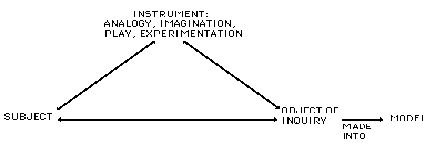
represent. In its embodiments, it takes the form of statements, categories, rules and procedures.
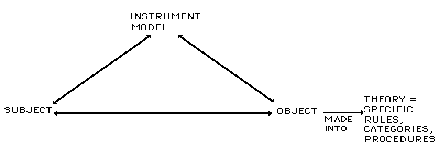
The stepwise process described above is neat and compact. It corresponds to the manner the process of ascending from the abstract to the concrete is often depicted in Marxist literature: as an essentially individual and mental process of expansion. However, it is too clean and regular to account for the cognitive-instrumental aspect of the ruptures involved in the creation of societally new activity structures.
A glance at Figures 4.1 to 4.3 reveals that thinking is here restricted to a solitary process.The subject remains individual. No community is involved. Similarly, the object remains the same from the beginning to the end. There is no structural expansion in these corners. Furthermore, theory as the end product of the process consists of new representations of reality; change in the reality itself is not implied.
To summarize, the steps described above depict theoretical thinking as a series on individually situated mental actions. The process corresponds to that of Learning IIb, as described above in Chapter 3.
What remains to be explained is the qualitative transition from series of individual, mental actions to a new collective, material activity system. In diagrammatic terms (Figure 4.4):
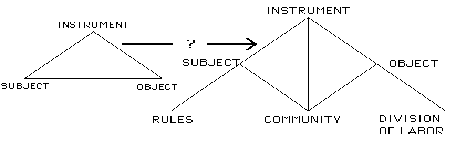
The general cyclic model of this expansive transition, or zone of proximal development, has been presented in Figure 3.3 in the preceding chapter. However, we are now dealing with the specific cognitive instruments needed for the conscious or intuitive mastery of the transition. So far, I have indicated that a new conception of concepts is required. I have also indicated that models play a special role within this new conception of concepts. But in order to characterize the cognitive instruments and their functioning more concretely, the successive dominant historical forms of the transition have to be analyzed. In other words, my functional analysis will necessarily acquire a historical dimension. The strict boundary between functional and historical analysis must be tendentially overcome.
To enter this kind of functional-historical analysis, I shall reinterpret B. M. Kedrov's (1966-67; 1972) famous historical account of the discovery of the periodic law of the elements by D. I. Mendeleev in 1868.
THE DISCOVERY OF THE PERIODIC LAW AS AN INSTANCE OF EXPANSIVE TRANSITION
D. I. Mendeleev discovered the periodic law in 1869. As an extraordinarily accurate person, he kept and stored without exception all documents and rough notes related to his work, even relatively minor and insignificant ones. From the late 1940's, Kedrov has conducted intensive investigations in the D. I. Mendeleev Museum at the University of Leningrad to reconstruct the course of the great discovery on the basis of these archive materials.
Mendeleev's discovery can be divided into four periods. Firstly, there was a preparatory period of about 15 years (1854-1869). Secondly, the discovery itself took shape within one day, February 17, 1869. Thirdly, the discovery was elaborated and refined during a period of approximately three years (February 1869 - December 1871). Finally, Mendeleev used the remaining 35 years of his life for the less intensive and condensed tasks of proving and completing the theory and pushing it through in the scientific community.
The activity system under our scrutiny here is that of the 'invisible college' or community of chemical researchers in the second half of the 19th century. Typically to science as universal labor, this activity system consisted of extremely distributed parallel working units. But these were still relatively autonomous and independent of each other.
"The first level, on which the overwhelming majority of chemists of this time stood, amounted to sorting the elements into natural groups ('specific') without relating them in a single unity. The second level involved laying bare the general law relating all of the elements ('general'), hence relating the groups in which they were already classified." (Kedrov 1966-67, 33.)
The barrier preventing this expansive breakthrough from the specific to the general level consisted of the relative encapsulation of the standard procedure.
"The grouping of elements according to their specific features became a tradition and stabilized itself in the consciousness of chemists. It finally became the strongest hindernis to the further development of the science (...). In fact, the grouping of elements according to the specific features requires that only chemically similar elements are compared and associated with each other, while chemically dissimilar and especially chemically opposite elements are not compared and definitely not associated with each other.
Contrariwise, the transition to the general level, i.e., the discovery of a general natural law covering all elements (...), necessarily requires the association of not only similar but importantly also of dissimilar elements." (Kedrov 1972, 88.)
The inductive tradition made it impossible to use the atomic weight, at that time the only known feature common to all elements, as the unifying basis for constructing a comprehensive system of the elements. It would have brought chemically dissimilar, even polarly opposite elements next to each other.
As the knowledge of the elements and their specific natural groups increased and became technically easier to obtain (electrolysis, spectroscopy), the disadvantages resulting of the lack of a general principle for arranging the elements gradually became visible.
"By the sixth decade of the nineteenth century, chemistry had reached such a stage that chemists ought to have discovered and brought about, by some means, a shift from the first level to the second. This was the task placed before chemistry by the objective line of development of the science itself." (Kedrov 1966-67, 33.)
As a matter of fact, at least two other scientists, Newlands in England and De Shancourt in France, came very close to the discovery at the same time as Mendeleev.
This general need state within the activity of chemical research was specifically aggravated in the case of Mendeleev. At the time of the discovery, he was writing his major textbook Fundamentals of Chemistry.
"The first part of this work was completed at the end of 1868, its final chapters being devoted to the group of very strong non-metallic haloids (halogens). Directly after the haloids followed the group of very strong metals - alkaline metals - to which the author allotted the first two chapters of the second part of his work.
It can be assumed that by the middle of February 1869 both chapters were finished, and the task confronted the author, with all insistence, of deciding which group of elements should follow the alkaline metals in the book. But to decide this it was necessary to elucidate which metals adjoined the alkaline closest of all. (...) To answer it, it was necessary to find some general principle according to which the elements should be arranged in their groups in a definite order (...)." (Kedrov 1966-67, 19.)
Mendeleev's chemical research activity may be characterized with the help of the triangle model developed in Chapter 2.
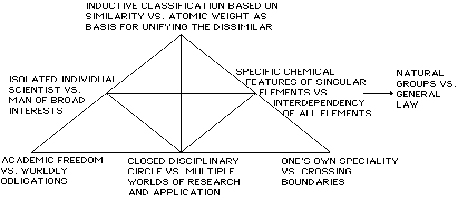
Now this personal aggravation of the general need state was not enough. A foreign element entered the system of research activity and intensified the conflict into a secondary contradiction. Parallel with his research, Mendeleev was passionately involved in co-operative programs of practical agricultural development. He had planned to carry out an inspection trip to some dairy artels in central Russia between February 17 and February 28, 1869. However, having just finished the two first chapters mentioned above, Mendeleev's mind was intensely preoccupied with the problem of the continuation of the book. At the same time, the departure for the inspection trip was coming closer.
"Thanks to these purely accidental coincidences, on the 17th of February, unexpectedly for Mendeleev, both lines of his activity during this period came in conflict and crossed: first, writing the Fundamental of Chemistry and, second, his trip to the dairy co-op. Since the trip was agreed upon with the interested organizations, Mendeleev could not avoid his obligation to go on a specific day. This circumstance strictly limited the time he could set aside for solving the problem confronting him (...). In other words, Mendeleev achieved the discovery of the periodic law under conditions of the most severe Zeitnot (time pressure), which gave rise to a very distinctive character and path in its development. The general psychological situation of Mendeleev on the day of the discovery can be compared with the situation of a chess master, caught at the very beginning of a game in Zeitnot, but striving at all costs to achieve a victory in spite of the unfavorable conditions." (Kedrov 1966-67, 20.)
Thus, the foreign element that entered the research activity was a new rule, namely that of a time limit. This, however, is still an insufficient picture of the conditions of the discovery. Mendeleev actually found quickly a partial, half-intuitive solution to the particular problem concerning the next chapter of his book.
"When Mendeleev found the answer to the question that had interested him - what group of metals should be treated after the alkaline metals in the Fundamentals of Chemistry - he did not regard his work as finished. (...) The concern was now with carrying out to the end the discovery of the lawfulness, already found in the first approximation. (...)
However, the method initially selected for constructing the table of elements by entering elements in it successively (one after the other), although it was successful in the first stage of discovery, turned out to be inapplicable for the whole set. The point is: while Mendeleev was operating on the well-known elements, all of them, with few exceptions, took their places in the table; even if their places had to be changed subsequently, such failures were few and did not obscure the whole picture of the organization of the elements which at any moment were included in the table. But when Mendeleev tried by these same means to find a basis for including in the table the poorly studied elements, the number of necessary corrections, transpositions, and deletions became so great that it began to interfere with the progress of the discovery. To recopy from the beginning in every case the incomplete table (...) was practically impossible. This would have taken so much time that one could not think of completing the whole work in a single day (for he was still to go out to the cooperatives on the following day). The Zeitnot (...) required finding a more convenient method for quickly carrying to completion the developing discovery." (Kedrov 1966-67, 23-24.)
This situation, the aggravated contradiction between an emerging idea and the lacking instruments for its formulation and elaboration, was sharpened to a point where symptoms of a double bind appeared.
"Calling on Mendeleev, it would seem, at just this moment, his friend A. A. Inostrantzev found Mendeleev in a gloomy, depressed state. According to Inostrantzev, Mendeleev began to speak of what was subsequently the embodiment of the periodic system of elements. But at this moment the law was still not formulated and the table still not completed. 'It's all formed in my head,' said Mendeleev with bitterness, 'but I can't express it in the table.'
(...) Mendeleev himself (...) wrote in his diary that after a period of enthusiasm he sometimes fell into a sudden slump, or even depression, ending sometimes in tears." (Kedrov 1966-67, 24.)
How did Mendeleev break the double bind? Here, quite an interesting, seemingly accidental analogy functioned as the springboard.
"It should be mentioned that Mendeleev loved to play the game of patience, where the thoroughly shuffled cards must then be rearranged according to definite rules, resulting in a definite pattern of disposing them by suit and denomination. The analogy with the distribution of elements turns out to be nearly complete; for at the moment when he considered this problem, two incomplete tables of elements were already written down on paper, and in them was already clearly charted a distribution of elements in two dimensions: horizontally, according to their general chemical properties or chemical similarity (which corresponds to arranging the playing cards according to suit), and vertically, according to the closeness of their atomic weights (which corresponds to arranging the playing cards by denomination)." (Kedrov 1966-67, 24.)
The springboard thus consisted of a technique and an image taken from a recreational activity quite remote from research work but thoroughly familiar to the subject. This kind of association may look purely accidental and arbitrary. But that is not the whole truth. Basically the same analogy had earlier been used in another problem by the famous scientist Gerhardt. Gerhardt drew the parallel between arranging cards by suit and denomination, on the one hand, and arranging organic substances in homologous and genetic series on the other. Mendeleev counted himself one of Gerhardt's convinced adherents, and of course was acquainted with this earlier application.
With the help of this springboard, Mendeleev constructed his famous 'chemical patience' which quickly "grew into a general picture of the future system of elements in its completeness" (Kedrov 1966-67, 26). In other words, the new general model of the object of chemical research activity was formulated.
The course of the discovery may now be summarized with the help of a table (Table 4.3) similar to those presented in the cases of Huckleberry Finn (Table 3.3) and Seven Brothers (Table 3.4).
Table 4.3 graphically reveals the problem peculiar not only to Kedrov's account but to most descriptions of scientific discoveries. The transition from the singular and specific to the general is followed only half way, to the point of the formulation and modelling of the new law or principle. But this is not yet the true level of generality. How does the new general model transform the structure and content of the practical scientific research activity in question? What is the nature of the tertiary and quaternary contradictions? These questions are left open, as if they were considered unessential for the understanding of scientific creativity. In my analysis, these questions should be recognized as all-important.
There is a reason for the general omission of these phases from the accounts of discoveries. A 'classical' discovery, such as that of Mendeleev's, is typically made by an ingenious craftsman-like individual scientist. Such a discovery, at least its intensive course, actually seems to terminate at the point where the individual craftsman-scientist publishes his revolutionary findings and, metaphorically speaking, hands them over to the scientific community (and indirectly to the society in general) for judgement and eventual application. The discontinuous nature of this historical type of transition makes it hard to realize the tremendous potential embedded in the emergence of the created new through the tertiary contradictions.
Table 4.3
The sequential structure of the discovery of the periodic law
__________________________________________________________
CONTRADICTION PHASE CONTENT ACCORDING TO KEDROV
Primary within Need state Generally: the inductive classificatory
the components tradition vs. the need to master the growing
of the old activity amount and complexity of the elements
Individually: the choice of the group of
elements for the next chapter of the book
Secondary Double bind The intruding new rule (time limit) vs.
between old instruments (inductive classification,
the components serial one-by-one procedure)
of the old activity
Object/motive The idea of patience as the springboard
construction New object: all elements in a comprehensive
system
New general model: the periodic law,
embodied in the periodic table
Tertiary Application, ?
between the old generalization
and the given new
activity
Quaternary Activity 2: ?
between the new reflection,
activity and its consolidation
neighbour
activities
__________________________________________________________________
But does it make any sense to talk about the given new in the case of a great scientific discovery? Isn't it all created new?
My contention is that scientific discoveries just like expansive developmental transitions in more mundane activity systems are to a large extent achievements of synthesizing and crystallizing elements that were already 'there'. In Mendeleev's case, atomic weights were already known. Surely in this case the given new is different from that of the seven brothers, for example. Science as universal labor produces strong generalizations. But the most dynamic and revolutionary aspect of scientific discoveries resides in the unexpected questions and ideas they evoke while being assimilated, argued against, generalized and applied. The psychologist or historian studying scientific creativity is usually interested in the creative individual. He thus looses track of the expansive development as soon as the subject of the process is no more just the individual genius but a collective or several collectives.
As Mendeleev's creative process reached its intensive phases, a new rule - the time limit - entered the lower left corner of the triangle in Figure 4.3. To facilitate the solution of the contradiction between the new rule and the old instruments, a provisional new instrument, namely the patience, appeared in the uppermost corner in the function of a springboard. These new prerequisites led to an expansive transition where there was a qualitatively new outcome of Mendeleev's actions: not just new specific classificatory knowledge about the elements but a totally new general principle for the understanding of their relations - the periodic law. This outcome was transformed into a new kind of general instrument, giving eventually rise to a qualitatively new developmental form of chemical research activity.
This historical type of activity and expansive transition corresponds to the classical ideal of university research. The ingenious individual scientist and his selfless striving after pure truth seem to be the prime movers behind great discoveries. In modern days, Michael Polanyi (1964) has made this type of transition into the eternal model of all research work. Polanyi's conception of science as activity may be summarized with the help of Figure 4.4. The noteworthy feature of this model is the lack of internal contradictions. Pressures toward change are seen as external threats, not as manifestations of the inner dynamics of research activity.
Drawing directly upon Polanyi, Jerome Ravetz (1971, 103; emphasis added) concludes that "in every one of its aspects, scientific inquiry is a craft activity, depending on a body of knowledge which is informal and partly tacit".
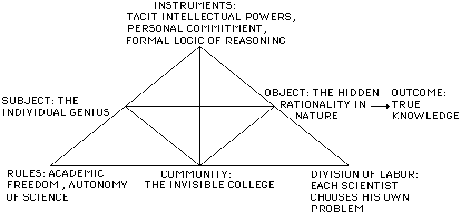
The ahistorical craft position renders Polanyi and Ravetz pitifully helpless when they face the fact of the industrialization of science. The tool they offer to scientists is heightened moral awareness. Especially in Ravetz's work, there is a striking contradiction between the quite accurate description of the industrialization of research and the insistence on the eternal craft quality of scientific work.
"In recent years, the vision of 'science' as the pursuit of the Good and the True has become seriously clouded, and social and ethical problems have accumulated from all directions. (...) This means, in the first place, the dominance of capital-intensive research, and its social consequences in the concentration of power in a small section of the community. It also involves the interpenetration of science and industry, with the loss of boundaries which enabled different styles of work, with their appropriate codes of behaviour and ideals, to coexist. Further, it implies a large size, both in particular units and in the aggregate, with the consequent loss of networks of informal, personal contacts binding a community. Finally, it brings into science the instability and sense of rapid but uncontrolled change, characteristic of the world of industry and trade in our civilization." (Ravetz 1971, 31.)
The industrialization of science means the breakthrough of 'big science' (Price 1963; Weinberg 1967), of large-scale research projects and research institutes with costly equipment and complex organization.
"This change is as radical as that which occurred in the productive economy when independent artisan procuders were displaced by capital-intensive factory production employing hired labour. The social consequences of the Industrial Revolution were very deep, and those of the present change in science, while not comparable in detail, will be equally so. With his loss of independence, the scientist falls into one of three roles: either an employee, working under the control of a superior; or an individual outworker for investing agencies, existing on a succession of small grants; or he may be a contractor, managing a unit or an establishment which produces research on a large scale by contract with agencies." (Ravetz 1971, 44.)
If the historical type of research work exemplified by Mendeleev's discovery (and idealized by Polanyi and Ravetz) is craft, then this new type may be called rationalized research. Its primary inner contradiction is that of any wage labor in capitalism.
"There then develops a research business, making its profit by the production of results in the fulfilment of contracts. The director of such an establishment is then truly an enterpreneur, who juggles with a portofolio of contracts, prospective, existing, extendable, renewable or convertible, from various offices in one or several agencies. In such a research factory, conditions are usually not conductive to the slow, painstaking and self-critical work which is necessary for the production of really good scientific results. Hence much, most, or even all the work can be shoddy; but the enterpreneur does not operate in the traditional market of independent artisan producers who evaluate work by consensus. So long as he can keep his contacts happy, or at least believing that they personally have more to lose by exposing themselves through the cancellation or non-renewal of contracts than by allowing them to continue, his business will flourish." (Ravetz 1971, 55-56.)
The most salient new components of research activity may be listed as follows. (a) Expensive and intricate technological instruments make state, military or industrial financing necessary. (b) The instruments make it possible to find unexpected practical applications of newly discovered natural laws and this creates a demand for new kinds of research objects and outcomes. (c) As a consequence, the community of research is no more the invisible college of free scientists but a large project, institute or conglomerate, consisting of researchers and enterpreneurs, often also of state administrators and military officials. (d) This community rapidly reorganizes the subject of research - the ingenious individual is replaced by the managers of the project or institute (leaving the individual researcher a moreless anonymous role). (e) The community is subjected to new kinds of rules, notably secrecy and pressing time limits [recall Mendeleev's Zeitnot: now it is an institutionalized feature]. (f) The community is also subjected to a new inner division of labor, including above all horizontal compartmentalization and vertical hierarchization (separation of planning and execution) within the research organization.
The first and most famous example of rationalized research work is naturally the Manhattan Project. It involved altogether 150 000 people and cost around 2 billion US$. The history of the project is documented and analyzed in many publications. One of the most concrete and detailed among the histories is Robert Jungk's (1956) Heller als Tausend Sonnen: Das Schicksal der Atomforscher. It isbased on interviews and letters of an impressive array of persons who were central in the process which led from the discovery of nuclear fission to the development and use of atom and hydrogen bombs. I shall briefly go through this process of expansive transition and summarize it with the help of the means already employed in the preceding case analyses.
Let us first depict the late craftwork form of atomic physical research that existed and bloomed during the 1920's and 1930's (Figure 4.5).
It is easy to notice that the activity of Figure 4.5 represents a late developmental form of science as craft. The subject is no more just an individual but a laboratory - though strongly indentified and led by a prominent individual. The division of labor is becoming dominated by an international competition between the laboratories. And what is most important, the instruments are rapidly becoming more costly and complex.
Within this activity system, the need state was experienced as tremendous uncertainty and excitement. It was caused by the collapse of the world view of classical physics through of a series of revolutionary
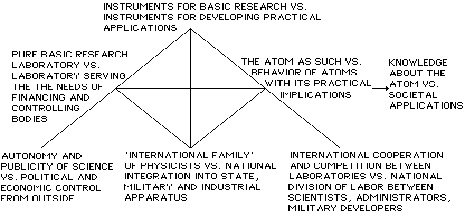
discoveries that culminated in Einstein's theory of relativity. The Curies, Rutherford and Bohr were showing that the indivisible could indeed be divided. Among leading physicists, there emerged a growing but still vague awareness that their reasearch was dealing with unprecedented powers, the release of which might eventually have great societal consequences. Jungk (1956, 16) quotes the German physicist and Nobel laureate Walter Nernst, writing in 1921.
"We live so to speak on an island made of guncotton, for which we thank God have not yet found the igniting match."
One could say that the primary internal contradiction of this type of research activity was that between the basically individual-autonomous form of scientific work and the increasingly societal dependencies and consequences of the instruments, objects and outcomes of that work. As Jungk (1956, 12) points out, already World War I had actually shattered the basis of the innocent isolation of the laboratories from the bloody reality of the rest of society. But the extraordinary creative ferment among the family of physicists during the 1920's and 1930's seemed temporarily to strengthen their autonomy.
The secondary contradiction and the eventual double bind ensued through a twofold process. Firstly, Chadwick's discovery of the neutron in 1932 and a series of experimental advances following it led the researchers to the treshold of splitting the atom. Secondly, at the same time a very different activity system, namely politics, intervened in the research activity. The strongest intervention came from the Nazis, first as persecution against numerous Jewish scientists, later as subordination of basic research to military purposes.
"But what an extraordinary coincidence it was that within twelve months, the neutron was discovered (February 1932), Roosevelt was elected (November 1932), and Hitler became the head of the German government (January 1933)!" (Jungk 1956, 61.)
The secondary contradiction was created, sharpened into a double bind, and solved expansively in two waves. The first wave resulted in the discovery of nuclear fission by Otto Hahn late in 1938. The second wave resulted in the launching of Manhattan Project in 1942.
The barrier to be overcome in the first wave was still 'purely scientific', reminiscent of Mendeleev's barrier.
"(...) according to the prevailing conceptions of physics, only shots of as yet unreachable penetrating power would be able to enter into the core of a heavy atom and split it. (...) The idea that neutrons with a diminishingly small voltage would succeed in doing what had not been accomplished by heavy shots was too fantastic to believe." (Jungk 1956, 72-73.)
In Mendeleev's case, the foreign (and seemingly accidental) element that aggravated the problem situation into a double bind was the rule of Zeitnot. In the case of atomic physics, the foreign element was also a rule - the rule of Nazist racial politics.
The background was a rivalry between the two leading female scientists in the field, Irène Joliot-Curie of Paris and Lise Meitner of Berlin, the latter having been for years the closest collaborator of Otto Hahn. The barrier characterized above could in effect be overcome only if the findings and procedures of the two laboratories, Paris and Berlin-Dahlem, were put together. The rivalry made that impossible, to the point that Hahn refused to read Joliot-Curie's scientific publications. But in 1938, the Nazi government was about to arrest Meitner because of her Jewish origin. Meitner emigrated from Germany in hurry. Hahn's new right hand, Strassmann, read Joliot-Curie's new paper and literally forced Hahn to assimilate it by going through it aloud.
"'That struck Hahn like a lightning', his collaborator recollects. 'He did not not even finish his cigar, left it burning on the desk and ran with me down into the laboratory.'" (Jungk 1956, 77.)
Hahn now pursued on the new track of experimentation and discovered the basic mechanism of the splitting of the atom, which he immediately sent for publication on December 22, 1938. Hahn's own theoretical generalizations were, however, still hesitant. Lise Meitner had moved to Sweden where she lived in isolation. She had just invited her young relative, the physicist O. R. Frisch from Niels Bohr's laboratory, to spend the Christmas with her. She then received Hahn's letter that contained the revolutionary findings of the new experiments. Meitner, in her turn, literally forced Frisch to listen to her reflections on these findings. This conversation and the ensuing ones resulted in a joint article by Meitner and Frisch (in the February 1939 issue of Nature ) where an adequate theoretical interpretation was made on the basis of Hahn's experimental findings. The concept of nuclear fission was born.
In this first wave, the double bind seems to have been experienced as a hopeless substantial and social falling apart of a most fruitful collaborative research work. Meitner's emigration seriously weakened the Berlin laboratory (whose efforts had been on a wrong track in the decisive point, anyway), and collaboration with the competing Paris laboratory was unthinkable. In this apparent dead end, the new social constellation (the two novel dyads, Hahn-Strassmann and Meitner-Frisch, in only indirect communication with each other) functioned as a spingboard.
In other words, it seems that there may be not only instrumental but also social springboards, consisting of novel intersubjective formations or recombinations.
The contradiction of the second wave was caused by the foreign political and military element (Hitler administration) that had entered the community of physicists and, using Hahn's discovery as instrument, now threatened to convert the object and outcome of the activity into an evil force: atom bomb. In other words, the contradiction was formed between the prevailing subject (relatively autonomous laboratory researchers) and the emerging new community (physicists embedded in a pool of politicians and military officials). The paradox is that the old subject tried to defeat the intruders by inviting other, at least equally powerful intruders. The attempt was to stop the atom bomb by preparing an atom bomb.
The ensuing double bind consists of the well known struggle of Leo Szilard and his companions (beginning in April 1939) to convince the American government of the necessity to take practical action against the danger of the possible preparation of an atom bomb in Hitler's Germany.
"Szilard, Wigner, Teller and Weisskopf had to overcome an internal and external barrier before they could contact the American government. As former continental Europeans, they had, at the most, meager trust basically in any government, but especially in military officials. None of them was a native American, and with the exception of Wigner they had not even stayed long enough in the country to become citizens.
While Szilard and his friends were still having headache about how they could get into conversation with some really influential American official, they received the trustworthy news that in the Third Reich work was already in progress on the 'Uranium problem', with the awareness and support of the administration. Thus, the worst fears of the emigrated atomic scientists seemed to be confirmed." (Jungk 1956, 89.)
In July 1939, Szilard and Wigner went to meet Einstein - another pacifist - in order to get him to use his authority to wake up the American government. After driving quite a while looking in vain for Einstein's house, Szilard began to hesitate and suggested that they give up - the whole idea was perhaps a grave mistake. His friend Wigner wanted to continue, and soon a little boy helped them to find the right house. The conversational contact with Einstein wiped out all doubt for the moment.
The episode bears the familiar characteristics of a double bind situation. Again, the springboard was social and conversational. The contradiction was solved through intensive action: the fatal letter to President Roosevelt was prepared.
What happened then is well known. The new military-scientific-industrial activity of nuclear research and development was indeed modeled and practically established. The modelling was initiated in two successive steps. Firstly, in July 1942, Robert J. Oppenheimer was appointed to head a small group of scientists to sketch the best theoretical model of the new object, then called the 'fast fission bomb'. Secondly, in the autumn of 1942, a group consisting of professor Oppenheimer, general Groves, and colonels Nichols and Marshall met in a train called Twentieth Century Limited to work out a plan for a centralized 'super laboratory' - the coming community of the new activity. In fact, the group sitting in the train could itself be conceived of as a social model or microcosm, a precursor of the community of Los Alamos.
Leaders of the huge sites of Los Alamos, Oak Ridge and Hanford became the true subjects of the activity - General Groves much more so than Robert J. Oppenheimer. The work was done under the rules of extreme time pressure and secrecy, and the division of labor was compartmentalized to the utmost.
"They elevated invisible walls around each small partial field, so that one department did not know anymore what the other one was working at. Hardly a dozen of the altogether 150 000 people who were finally employed by the 'Manhattan Project' could have a view of the whole. In fact, only a very small portion of the personnel knew even that they worked at an atom bomb." (Jungk 1956, 122.)
Table 4.4 summarizes the sequential structure of the discovery of nuclear fission, and eventually of the atom bomb.
In the phase of application and generalization, the physicist's struggle against the subordination of research to destructive purposes, to secrecy and rationalization, has obviously not only been defensive. It has also produced elements of the created new. However, I shall not go further into the historical development of the inner contradictions of the new activity system of rationalized nuclear research. Here, the main point is that Project Manhattan was not a historical accident but rather a prototype of the coming projects of rationalized big science.
Table 4.4
The sequential structure of the discovery of nuclear fission
__________________________________________________________
CONTRADICTION PHASE CONTENT ACCORDING TO JUNGK
Primary within Need state Generally: the autonomous form of research vs. its
the components increasing societal dependencies and consequences
of the old activity Individually: rivalry between Hahn & Meitner and
Joliot-Curie, resulting in a scientific dead end
Secondary Double bind First wave: intruding new rule (Nazist racial policy)
between vs. old community (Hahn-Meitner group)
the components Second wave: new political and military element
of the old activity (Hitler administration) intruding into the
community (family of physicists) vs. old object and
outcome (atoms and knowledge of them as such)
Object/motive First wave: new socio-conversational constellation
construction (Hahn-Strassmann; Meitner-Frisch) as springboard
Second wave: new socio-conversational constellation
(Szilard - Wigner - Einstein) as springboard
New object: the bomb
New general model: first the theory of the fission
reaction; then model of the optimal bomb and of
the 'super-laboratory'
Tertiary Application, Traditional autonomous craft research vs.
between the old generalization rationalized research in the nuclear establishment
and the given new (plus created new actions going beyond both)
activity/motive
Quaternary Activity 2: Rationalized nuclear research and development
between the new
activity and
its neighbour
activities
__________________________________________________________________
The structure of the resulting new activity system is depicted in Figure 4.6. It presents the idealized anatomy of the first major formation of rationalized science. No doubt it was still science. World's foremost theoretical physicists, men like Niels Bohr and Enrico Fermi, worked in Los Alamos. In Figure 4.6, the new activity system looks harmonious and free of contradictions. This is in fact how it looked in the eyes of its leading subjects at the peak of the creative enthusiasm, before Germany's surrender and the actual explosion of the first bombs.
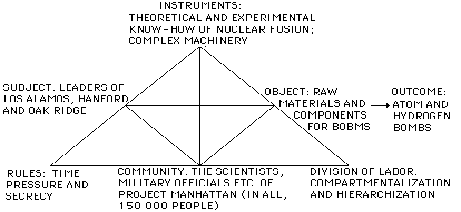
As a historical activity type, rationalized science differs greatly from science as craft. In science as craft, the individual scientist produces a new general model (a law of nature, a theory) which he 'gives up' into the hands of the scientific community. There is a marked break between the phase of object/motive construction and the phase of application and generalization (see Table 4.3). This break may even take the form of a long standstill: the new discovery is first rejected and perhaps only after the death of the individual subject it is finally applied and generalized.
In rationalized science, the time factor becomes essential. The new scientific product must be quickly put out into the market (whatever that is as a system of object-activity; recall Figure 2.7).
Furthermore, in rationalized science, the object and outcome of the activity become fixed in advance. The basic idea is to produce what has been ordered. However, this does not mean that rationalized science is somehow automatically more conscious of the consequences of that new product, of the transformations it may bring about in the structure of the scientific activity itself and in its object-activity. To the contrary, the compartmentalized and hierarchic division of labor effectively prevents the participants - including the leaders - of rationalized science from foreseeing and influencing these transformations. Thus, even though the transition from individual actions to a qualitatively new form of activity may take place rapidly and dramatically, as if in a compressed period of time, the events proceed to a large extent behind the backs or above the heads of the actors. Robert J. Oppenheimer's personal tragedy testifies to this in an exemplary manner.
However, within rationalized science, there were from the very beginning certain more urgent and practically pressing problems.
"Thus, for example the majority of the staff of the Los Alamos computing centre had for a long time no idea of the purpose of the complex calculations carried out with their computing machines. Since they did not know what the aim of their calculations was, they worked without real interest. Feynman, one of the young theoretical physicists, finally accomplished to get the approval to tell these people what was actually supposed to be made in Los Alamos. After that, the output of the department increased noticeably and some people even did voluntarily extra hours." (Jungk 1956, 122.)
This was clearly breaking the rules of the activity. Jungk reports a further incident from Los Alamos, this time concerning Edward U. Condon, one of the pioneers of American experimental physics.
"As a consultant of big industrial companies, Condon had practical experience in problems of production which the academician Oppenheimer could not have. On the basis of this very experience, Condon immediately saw that the 'compartmentalization' would not work without harmful consequences in Los Alamos. Therefore he worked out a decree of his own, tearing apart the artificially constructed walls between the individual departments. Groves regarded this as severe disobedience and accomplished to transfer Condon to another post." (Jungk 1956, 129.)
The history of rationalized science - and rationalized labor in general - is full of similar conflicts, endangering the motivation and productivity of the work. The above quotations demonstrate how a parallel historical type of activity emerged out of these inner conflicts of rationalized science almost as soon as the former was born. This parallel type may be called humanized science.
In humanized research, above all the division of labor is revised. Instead of extreme hierarchization and compartmentalization, an organization or sub-organization of relatively autonomous production groups is formed. A production group is given a meaningful, often challenging task which has a wholistic character. The group is mainly responsible for the quantity and quality of its total output. Its procedures are not closely supervised from above. Therefore, within the group the hierarchy is minimized while cooperation and open communication are supported. Members of the group may be highly specialized individuals, but measures are taken to reach and uphold a shared consciousness of the total task and overall progress of the work. Subtasks are flexibly combined and redelegated in the process of the project's work.
Also the subject of the activity changes. In rationalized science, the compartmentalized individual researcher may find it very hard to identify himself as a subject of the activity. In humanized science, the management strongly strives after this identification. Personal commitment of each participant is a key element of this type of activity. Thus, the subject acquires two distinct layers: the management of the overall activity, and the semi-autonomous group as a functional unit of that activity.
On the other hand, the object, the outcome, the instruments and the community of the activity are in principle not qualitatively different from those of rationalized science. Even the rules normally change only within the group. In the context of the overall activity, secrecy and competition between groups often prevails. And the time pressure may become harder than it could ever be in rationalized research.
Humanized research - and humanized work in general - obviously has a double function. It is a competing, hostile alternative to rationalized research. Simultaneously, it is a balancing or compensating factor, living in a symbiosis with the rationalized type of research.
In The Soul of a New Machine, Tracy Kidder (1981) vividly describes the process of developing the new computer MV/8000 by a semi-autonomous group of engineers in Data General. Though not an example from the sphere of basic research, the process nicely fulfils the requirements of the humanized type of activity characterized above.
Kidder's account also demonstrates the fatal barrier common to both rationalized and humanized research. The group produces the prototype of the qualitatively new machine (the new model) in record time. But the group, including its leaders, is all but helpless when the process enters the phase of application and generalization. The sales and marketing people take over. The group has suddenly no identity - it disintegrates and vanishes. There is an unavoidable feeling of loss at the end of the book. Somehow the subjects were only fake subjects, unable to foresee even the near future of their own group, not to mention the future transformation of the overall activity of the company. Even though the transition was fast, it was no less beyond human mastery than the craft type of transition.
I have now sketched three broad historical activity types: the craft type, the rationalized type, and the humanized type. At the same time, these are historical types of expansive transition. Within each historical activity type, the expansive transition from one form of activity to another, more advanced form bears the historical characteristics of the given activity type. There may be several successive expansive transitions within one and the same historical activity type. But there are also revolutionary expansive transitions which lead from one activity type to another.
In Chapter 2, I have indicated that a fourth historical activity type is currently emerging. In the conceptual context of Chapter 2, I talked about expansive learning activity or learning by expanding. In the conceptual context of Chapter 3, I talked about expansive Learning III. Such a new type of transition implies an emerging collectively and expansively mastered activity type.
I feel tempted to use the term 'consciously mastered' or even 'theoretically mastered'. On the other hand, those labels sound foolhardy. It is safer to acknowledge the potential importance of intuitive forms of collective and expansive mastery, especially since the concept of consciousness is usually restricted to individual awareness alone. The 'loss of the I' or the 'liberated action' are indeed difficult to include into our common conceptions of consciousness.
Why have I used so much space for the discussion of science as activity? Because it is universal labor, containing in a relatively pure form the tendency toward the creation of novel general use values. This tendency is, though mostly in disguised forms, embedded in any human activity system. Science (along with art) makes expansive transitions its own main business, being supposedly conscious of what it is doing.
But what is the relationship between the literary examples of Chapter 3 and these examples from the development of science? Firstly, Huckleberry Finn and Seven Brothers both are historically about the craft type of transition. Secondly, in both those stories we are dealing with transitions where the given and created new is mainly objectified in the changed lifestyle of the subjects themselves. In other words, the new models are not easily separable from the subjects and hence the discontinuity of craft transition remains invisible (it becomes visible only when we consider it in terms of social and geographical isolation). In science, the new models are objectified entities that 'live their own lives' separate from their creators - hence the visible discontinuity. Thirdly, and for this very reason, in science we are more visibly dealing not only with the transformation of the central research activity itself but also with the - nowadays often nearly simultaneous - transformation of the object-activity for which the given research activity provides with new general instruments.

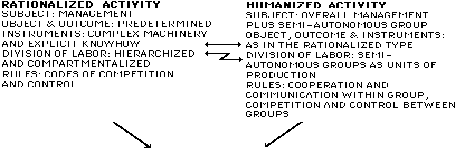
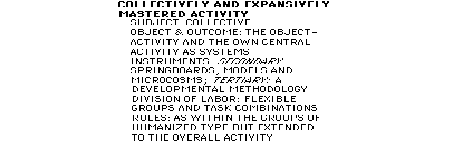
The central features of the four historical activity types, and of the corresponding types of expansive transition, are summarized in Figure 4.6.
The collectively mastered type of transition in Figure 4.6 refers to a mastery over the entire cycle of expansion depicted in Figure 3.3. After the presentation of such awesome transitions as the one behind Project Manhattan, it is only reasonable to doubt whether this fourth type of transition will ever be reality.
Jungk (1956, 91) quotes Heisenberg saying that in the summer of 1939, twelve leading physicists could have prevented the construction of the atom bomb through joint discussions. According to Jungk, those twelve men had morally and politically not grown up to meet the challenge of the great discovery. "The suspicion was stronger than the 'family ties' between the atomic scientists." Jungk (1956, 91) further quotes Heisenberg's friend von Weizsäcker saying that "it was not enough that we were a family, perhaps we ought to have been an international brotherhood with powers of disciplinary coercion over its members". In effect, von Weizsäcker is here ex post facto groping after a social model or microcosm that might have worked as an instrument for mastering and directing the transition in an alternative manner.
No doubt there is a kernel of truth in Heisenberg's statement. Those twelve men could at least have influenced the development much more than they actually did. Indeed, there seems to have been a marked lengthy period of ambivalence and indetermination between Hahn's discovery and the actual commencement of Project Manhattan.
Here, I will not to try to prove that such unexploited possibilities are a lawlike regular ingredient of any expansive transition. That can only be demonstrated through historically informed developmental research in concrete activity systems. My task here is to work out conceptual instruments for such research. These research instruments are necessarily also means for the practical accomplishment of collectively mastered transitions.
Thus, I will now systematize the central secondary instruments of expansion found so far.
In the preceding analysis, three types of secondary instruments of expansive transition have been identified. These are springboards, instrumental models, and social models or microcosms.
In the cases of Huckleberry Finn, Seven Brothers, Mendeleev's discovery of the periodic law, and the emergence of the Manhattan Project, the following examples of sprinboards were found (Table 4.5).
Table 4.5
Examples of springboards
__________________________________________________________
Huckleberry Finn Seven Brothers The periodic law Manhattan Project
Technique of lying Image of making tar Image and technique a) Novel socio-
of patience conversational
constellation: Hahn-
Strassman; Meitner-
Frisch
b) Novel socio-
conversational
constellation: Szilard-
Wigner-Einstein
__________________________________________________________
On the basis of the examples summarized above, I put forward the following definition of the springboard.
The springboard is a facilitative image, technique or socio-conversational constellation (or a combination of these) misplaced or transplanted from some previous context into a new, expansively transitional activity context during an acute conflict of a double bind character. The springboard has typically only a temporary or situational function in the solution of the double bind.
Is there any difference between the concept of the springboard and the concept of experience, as advocated by Polanyi and the Dreyfus brothers?
Experience is supposed to be functioning in the form of smooth, tacit and automatic similarity recognition. Springboards do not come about smoothly and automatically. They appear in times of distress, almost as lifebuoys. Little is known about the psychological mechanism of their appearance, but intense mental struggle seems to be a necessary precondition. Moreover, experience is supposed to provide solutions on the basis of earlier similar occasions. Springboards are not solutions. They are starters or hints toward a path leading to an expansive solution. In their appearance, their concrete contents often have little or nothing to do with the substance of the eventual solution.
These differences are usually neglected in cognitive theories of metaphoric and analogical reasoning. Donald Dchön's (1983) work is exceptional in its emphasis on context and developmental continuity. He uses the concept of 'generative metaphor' which is based on the mechanism of 'seeing-as'. In other words, even he restricts his theory to moreless direct relations of visual similarity. The cases presented above demonstrate that a springboard may indeed be a visual image (e.g., the image of making tar). But it can also be an entirely non-visual, almost motor technique (e.g., the technique of lying). And it can be a socio-conversational constellation where the verbal interaction is decisive. Thus, the modality of the springboard varies, and direct similarity relations are an exception rather than the rule.
In the four cases analyzed in this book, the following general models were found (Table 4.6).
Table 4.6
Examples of general models
__________________________________________________________
Huckleberry Finn Seven Brothers The periodic law Manhattan Project
'I'll do whatever is Civilized agricultural The periodic law, a) The physical theory
handy at the moment' life embodied in the of nuclear fission
periodic table b) The theoretical model of the optimal bomb and
the model of the 'super-
laboratory'
__________________________________________________________
There are obvious qualitative differences in the modality of the models found. For Huck Finn and for the seven brothers, the new general model remained a verbal expression of external or internal speech (for the concept of inner or private speech, see Zivin 1979). For Mendeleev, the new general model took the shape of a written theory, crystallized in graphic form in the periodic table. For Hahn and Meitner & Frisch, the model was expressed in the form ofwritten theory and mathematical formulae. For Oppenheimer and Groves, the model of the bomb and the model of the super-laboratory appeared in the form of written theory, mathematical formulae and technical drawings.
However, there is a more important dimension along which the models should be compared. I shall call it the structural quality or type of rationality exhibited by the model. This dimension is intimately connected with the conception of causality behind the model.
The most primitive models are exemplars or prototypes chosen or made to represent something general within a broader class of things or phenomena. The concept of model within the fashion industry still carries this meaning: an individual representing the broader class of 'beauty' or 'style'. Such a primitive model is originally spontaneous; it is not constructed with the help of conscious analysis but rather through intuition and habituation. This type of a model implies a magic or animistic conception of causality: things and phenomena are seen as being driven by forces or even intentions of their own. Perhaps more importantly, this rationality type seeks explanations in history and in the wholistic nature of universe.
"In place of a common causal background conditioning the properties and events of nature, 'historical' grounds are adduced. (...) This inclination to evolve a concrete causality expresses itself in advanced mythical thought in the conception of an epoch removed from any historical duration. The mythical period is conceived as creative, as containing the forces of genesis governing the appearance of this world." (Werner 1961, 304-305.)
"The world is seen as a visible whole whose parts are of material, thing-like nature. It is interpreted as a unity, but this unity is that of a concretely represented, mytho-sociological organism." (Werner 1961, 312.)
"The psyche in a culture innocent of writing knows by a kind of empathetic identification of knower and known, in which the object of knowledge and the total being of the knower enter into a kind of fusion, in a way which literate cultures would typically find unsatisfyingly vague and garbled and somehow too intense and participatory." (Ong 1977, 18.)
Writing entails a world view characterized by closure: fixed definitions and nomenclature, stable order and classification. The static, eternal hierarchies of the medieval conception of universe are most typical models of this type. These may be called nominalistic and classificatory models. The conception of causality behind them is that of predetermination from above. As Koestler (1964, 640) points out, such models are "hierarchic par excellence but rigid; they resemble stone pyramids in the mental landscape".
Classificatory models reached one of their peaks in the work of Peter Ramus (1515-1572) on textbooks.
"(...) textbooks for virtually all arts subjects (dialectic or logic, rhetoric, grammar, artihmetic, etc.) that proceeded by cold-blooded definitions and divisions leading to still further definitions and more divisions, until every last particle of the subject had been dissected and disposed of. A Ramist textbook on a given subject had no acknowledged interchange with anything outside itself. (...) Moreover, the material in each of the Ramist textbooks could be presented in printed dichotomized outlines or charts that showed exactly how the material was organized spatially in itself and in the mind." (Ong 1982, 134-135.)
Among my four cases, the model of the seven brothers exemplifies this classificatory type. The picture of civilized agricultural life in the village is deeply anchored in ideals of stable order, harmony and hierarchy.
The emergence of modern natural science produced a rationality type that gradually surpassed the nominalistic and classificatory type.
"The higher craftsmen of the 16th century, the artists and military engineers were not only used to experimenting but also to expressing their results in empirical rules and quantitative concepts. The substantial forms and occult qualities of the learned were of little use for them. They seeked usable and if possible quantitative rules of procedure when they were to construct levers, machines and guns. In the manuscripts of Leonardo da Vinci (around 1500), such quantitative prodedural rules are given time and again. Normally they are formulated in the manner of cooking recipes: 'If you want to know', so says Leonardo in the explanation to a drawing of a balance beam, 'how much more MB weighs than AM, observe how many times CB goes into AD', etc." (Zilsel 1976, 82; italics added.)
Models of this type are procedural, whether algorithms or heuristic rules. If nominalistic and classificatory models answer the question 'what', these procedural models answer the question 'how'. They no more try to capture fixed, immovable hierarchies - they are constructed to facilitate practical achievements. The conception of causality behind this type of models is linear and sequential. This rationality type reaches its peak in the design and manufacture of machines.
Among our four cases, Huckleberry Finn's model is an example of heuristic rules. Typically, it has the form of a command or recipe: 'after this always do whichever comes handiest at the time'.
The limits of procedural models become visible when something goes wrong, when the object or instrument no more acts according to the steps prescribed in the algorithm. They also become visible when the situation is novel and there is uncertainty about which procedure to select or design. Finally, the limits become visible when the object or instrument becomes so complex that the sheer multitude of possible specific rules and procedures becomes overwhelming. In such contexts, general heuristic rules are offered as a solution. However, the more general the heuristic, the more empty of content and void of explanatory power it becomes.
In the 19th century, conceptions of holism, systemic interdependency and probabilism gained momentum in various branches of science (von Bertalanffy 1968, 45). The background conception is retroactive causality in which "a whole system is seen to be involved in a closed retroactive causal relation" (Wartofsky 1968, 306).
"Modern physics, particularly the physics of elementary particles, cogently demonstrates the restricted nature of the causal conception viewed as a unilateral action of one body on another and shows its failure to account for microprocesses. The idea of cause as an interaction of fields, particles, which gives rise to various microprocesses is of essential significance in substantiating the physical ideas of modern quantum field theory. Twentieth-century physics has a marked tendency to combine the causality principle with the systemic-structural approach to phenomena. Essentially speaking, a cause is in the nature of an interaction of the various elements, parts, tendencies of a system that governs the behaviour of that system." (Svechnikov 1971, 241-242.)
Models of this rationality type are systemic models. If classificatory models answer to what-questions and procedural models to how-questions, systemic models aim at answering to questions of why-type. Such models function as aids for diagnosing and predicting the behavioral states and changes of complex systems. They are typically probabilistic in nature (for a recent discussion of the social construction of systemic models, see Bloomfield 1986).
Among my four cases, Mendeleev's model of the periodic system of elements seems to be something between a classificatory model and a systemic model. It is no more a simple hierarchy. It was constructed through uncovering interdependencies between the whole system and its elements. However, the tabular form of the model does not directly depict dynamic transitions and movements within the system.
On the other hand, when Oppenheimer, Groves and their staff designed the bomb as a complex technical device and the super-laboratory of Los Alamos as a complex organization, they were bound to use systemic models. For one thing, the probabilistic uncertainty before the first successful test explosion testifies to that.
The very successes of systems thinking and systems engineering have prompted doubts about the final adequacy of the systemic rationality type. The growing awareness of global and universal interdependencies evokes questions like 'where are we all going?' and 'how did all this begin?' But the dimension of time is very restricted in the closed systems view behind most of the cybernetic efforts. Time is seen as a continuum in which the given system moves between different behavioral states. But there is no conceptualization for the dynamics of the qualitative development, or expansive transformation, of the system itself. This is particularly evident in the pessimistic world models, or 'simulations of doom' (Bloomfield 1986, 167), produced by systems analysts since the early 1970's.
"Global modeling projects typically begin by looking at the past and using it as a basis for describing the present. Once a model has been developed, it is used to generate a 'baseline' scenario from the present into the future, assuming no fundamental change." (Richardson 1984, 126.)
In the natural sciences, this restricted conception of reversible time has been most strikingly challenged by Ilya Prigogine's notions of irreversible time and self-organization (see Prigogine 1984; Prigogine & Stengers 1985).
Moving along somewhat similar lines, David Bohm (1981) tries to reconceptualize causality using the notion of 'formative cause'.
"(...) in the Ancient Greek philosophy, the word form meant, in the first instance, an inner forming activity which is the cause of the growth of things, and of the development and differentiation of their various essential forms. (...) In more modern language, it would be better to describe this as formative cause, to emphasize that what is involved is not a mere form imposed from without, but rather an ordered and structured inner movement that is essential to what things are." (Bohm 1981, 12.)
Attempts like those of Prigogine's and Bohm's indicate the emergence of a new rationality type. This rationality type is essentially historical and holistic - features common with the most primitive rationality type described above. But where primitive historicism and holism is essentially immediate or spontaneous, the new historicism and holism is highly reflective and mediated by a specific type of models.
Neither Prigogine nor Bohm elaborate on the question of the instrumental models of this new rationality type. As Prigogine acknowledges, there is another tradition of thought which has struggled with this problem.
"We have described (...) a nature that might be called 'historical' - that is, capable of development and innovation. The idea of a history of nature as an integral part of materialism was asserted by Marx and, in greater detail, by Engels. Contemporary developments in physics, the discovery of the constructive role played by irreversibility, have thus raised within the natural sciences a question that has long been asked by materialists. For them, understanding nature meant understanding it as being capable of producing man and his societies." (Prigogine & Stengers 1985, 252-253.)
The lineage from Hegel to Marx and Engels, and further to Ilyenkov and Davydov (see the sections 'Dialectical logic and concepts' and 'Davydov and the problem of concepts' above) suggests that the models needed here are of the germ cell type, expressing the genetically original inner contradiction of the system under scrutiny. Such models function not just as devices for diagnosing the behavioral state of the given closed system but as means for tracing and projecting the genesis and expansive transitions, or 'fluctuations,' of an open system.
I suggest that the triangle models of activity developed and used in this volume may be considered as an attempt at such modelling. Moreover, among my four cases, the theory of nuclear fission, discovered by Hahn and further formulated by Meitner and Frisch, is an obvious candidate to represent this type of models. The problem with this model is, however, that it was restricted to representing the expansive and irreversible process of nuclear fission in terms of a natural phenomenon only, being totally unable to model it as a socio-historical phenomenon. The latter aspect, the socio-historical modelling of nuclear fission, was thus left to men like Groves and Oppenheimer who could only produce closed systemic models suited for technical optimization but not for mastery of the socio-historical process.
I shall now summarize what has been said about the five historical types of models (Table 4.7).
Table 4.7
Five historical types of models
__________________________________________________________
Type of model Conception of causality Case example
1. Spontanoeus prototype Magic, animistic -
2. Nominalistic and Predetermined from above Seven Brothers
classificatory
3. Procedural Linear and sequential Huckleberry Finn
4. Systemic Retroactive The periodic table [?]
Project Manhattan
5. Germ cell Historical, formative Nuclear Fusion [?]
__________________________________________________________
In expansive transitions, voyages through zones of proximal development, general models are primarily needed to envision and project the evolving object and motive of the new activity. Such models are instrumental in the strict sense of the word. However, another type of vehicle is also often found to play an important part in expansive transitions. In the analyses of the four cases, I have called these vehicles social models or microcosms.
Microcosms
In my four cases, the following microcosms were found (Table 4.8).
Table 4.8
Examples of microcosms
__________________________________________________________
Huckleberry Finn Seven Brothers The periodic law Manhattan Project
The raft and its The farm house of - a) -
people Impivaara b) Oppenheimer, Groves
and the two colonels in
the train
__________________________________________________________
Microcosms are miniatures of the community upon which the new form of activity will be based. They are social test benches of the new activity. It is common to all the three examples in Table 4.8 that the microcosm in physically and socially a relatively isolated formation: a raft on the river, a lonely house in the backwoods, a train cabin. It is also a temporary formation - a vehicle to be abandoned after time is ripe for the decisive step of social and organizational generalization.
On the other hand, the examples of Table 11 do not cover the emerging collectively mastered type of expansive transition. Features like the relative isolation may be radically altered as we enter transitions of that type.
I have now proposed a set of secondary instruments of expansive transition. However, expansive transition in its emerging collectively and expansively mastered form is to be understood as learning activity. A whole molar activity can only be mastered with the help of a tertiary instrument (recall Tables 3.1 and 3.2). In other words, it requires an overall methodology for making and using the secondary instruments described above.
The classical candidate for such an instrument is formal logic, or its close relative, the Piagetian formal operations. As has been argued earlier in this chapter, formal logic is not suitable for mastering processes where irreversible time and qualitative development are central.
"Formal-operational adults supposedly live in a hermetically sealed ahistorical universe where life is a matter of necessities deriving from the natural, nonmanmade laws of equilibration. Such individuals have no life histories, much as they have no memories. The elimination of the historical dimension (...) is conductive to the kind of technological rationality that underlies the most profound problems of modernized life, including the nuclear threat." (Broughton 1984, 408.)
Feeling uncomfortable with formal operations as the penultimate stage of cognitive development, a number of researchers are today entertaining the idea that there must be one or more developmental stages beyond Piaget's stage of formal operations.
The volume Beyond Formal Operations (Commons, Richards & Armon 1984) contains a representative collection of papers from this broad approach. In his vehemently critical closing paper, Broughton (1984) lists nine variations of this approach. He characterizes the theorists behind these attempts as 'liberal revisionists', trying to 'humanize' the Piagetian formal-logical apparatus. They exhibit little quarrel with the orthodoxy of Piaget's stage theory and most of them support the reality and significance of formal thought. For them, formal logic applies in one sphere, but in some other sphere or developmental period an alternative or more advanced mode of thought appears. The basic Piagetian sequence remains intact. Thus, Broughton argues, the proposed stages beyond formal operations are built on a false foundation.
Broughton's critique might be interpreted to suggest that no formal-operational type of thought actually exists. I agree with this conclusion if formal operations are understood as a universal, in the final analysis biologically determined mode of thought. However, in socio-historical reality formal logic and formal operational thought (in various approximations to the ideal type) no doubt do exist. In my analysis, formal-operational thought, like any thought form, is a man-made artifact, a tertiary instrument of a certain historical period. It exists but it has only a limited life cycle.
Thus, the question is not what comes after formal operations in the (ahistorically understood) ontogenesis but what comes after it socio-historically. The analyses presented in this book point to one requirement: the new tertiary instrument must facilitate the mastery of expansion in irreversible time.
Among the theoreticians writing in Beyond Formal Operations, only Patricia Arlin takes up the notion of expansion as a central problem. She points out that the hypothetico-deductive model of formal-operational thought requires that problems be presented to subjects for solution. Possibilities and hypothesis are constrained by the nature of the problem presented; they are confined within the given system (Arlin 1984, 262). Arlin suggests that there are two basic mechanisms operating in post-formal thought: contraction and expansion. Contractions imply purposeful subordination of the thought to the limited constraints of the problem. Expansions imply purposeful ascending above the confines of the given problem. The expansive form of thought analyzed by Arlin is called problem finding. It represents "the ability to raise general questions from many ill-defined problems" (Arlin 1984, 264; see also Getzels & Csikszentmihalyi 1976).
"The argument for a fifth stage [formal operations being the fourth; Y.E.] is based on this definition of problem finding and on the observations that 'general questions' are uncommon in adolescent thought." (Arlin 1984, 265.)
Arlin's notion of expansion thus remains on the individual-psychological and empirical-observational level. It is more a hunch than a concrete methodological instrument.
In fact, the representatives of the post-formal approach do not discuss their proposed higher stages in terms of instruments. Among them, development seems to be considered in a rather traditional fashion - as something which can be observed and explained but not touched and mastered. Interventions are curiously absent in Beyond Formal Operations.
Understandably this stance leaves a vacuum within the field of education. This vacuum is currently filled by numerous programs for teaching 'general thinking skills' (for an overview, see Nickerson, Perkins & Smith 1985). The promising word 'general' hints at something in the order of tertiary instruments. However, the dominant tenor within this movement is that creative and critical thinking are be divided into separate skills. Some of these skills arefurther analyzed into steps. These stepwise procedures are then taught, either in separate courses or embedded in various school subjects. A typical 'general thinking skill' may look like one of the following three examples:
EXAMPLE 1
1. Refocusing phase - 2. Awareness phase - 3. Responsibility phase - 4. Goal-setting phase - 5. Task engagement phase - 6. Task completion phase. (Marzano & Arredondo 1986, 21.)
EXAMPLE 2
Rule 1. Identify/state purpose for analysis. - Rule 2. Identify clues or questions to guide your analysis. - Step 1. Separate the 'whole' into its parts. - Step 2. Compare one part to your clues or questions. Record your findings (make a list). Repeat this step for every identified part from Step 1. - Step 3. Draw inference/make generalization to satisfy goal stated in Rule 1. (Jackson 1986, 35.)
EXAMPLE 3
1. Define the situation. - 2. State the goal. - 3. Generate ideas. - 4. Define the new situation. - 5. Prepare a plan. - 6. Take action. (Wales, Nardi & Stager 1986, 40.)
These 'general thinking skills' are actually algorithms or heuristic rules for carrying out certain commonplace actions which our cultures are used to call ' problem solving' or 'analysis' or 'decision making'. Compared even with Piaget's elaborate structure of formal operations, the separate 'thinking skills' are specific and arbitrary. They certainly have little to do with an overall mastery of expansive transitions. From the point of view of people's life activities, the term 'general' is here used perversely, as if life consisted of heaps or puzzles of discrete pieces that can be put together in a haphazard 'and-summative' manner.
Then again, that's how life often does look. The perversion is itself an adequate reflection of the subjective consequences of an alienating division of labor.
Before the current wave of interest in post-formal operations, Klaus Riegel (1973) proposed that the 'fifth stage' of cognitive development consists of 'dialectical operations'. Riegel's conception of dialectics is summarized in his Foundations of Dialectical Psychology (1979). Parallel to that effort, the social scientist Ian Mitroff and his colleagues started a research program on what they called 'dialectical inquiring systems' (for an overview, see Mitroff & Mason 1981). Though stemming from different disciplinary traditions, the epistemological and psychological conceptions of these two strands of research are essentially similar. The most thorough empirical investigation along these lines so far is presented in Dialectical Thinking and Adult Development by Michael Basseches (1984).
Riegel's characterization of dialectical thinking goes as follows.
"Each thing is itself and, at the same time, many other things. For example, any concrete object, such as a chair, is itself but, at the same time, is of many different properties. By selecting some and disregarding others, we might develop one or another abstract notion (theory) about the chair. But only when we see all of these properties in their complementary dependencies do we reach an appropriate, concrete comprehension. (...) Dialectical thinking (Vernunft) comprehends itself, the world, and each concrete object in its multitude of contradictory relations." (Riegel 1979, 39.)
Riegel then takes up Hegel's (1966) famous discussion of 'master and slave'. He points out that to consider either one, the master or the slave, separated from the other, would be abstract and non-dialectical.
"Only a description of both in their mutual relation provides a concrete representation of the totality without covering up one or the other. Such a description represents dialectical thought with its intrinsic contradictions." (Riegel 1979, 39.)
This sounds reasonable. However, a closer look reveals deep problems. First of all, Riegel systematically reduces his systems into dyadic formations. The mother-child dyad and the author-reader dyad are among his favorite examples.
"The minimal condition for an analysis that searches not only for answers but also for the questions includes two individuals (for example, a mother and her child), both operating interactively over time and thus growing and developing together." (Riegel 1979, 1.)
"The load for the reader as well as for the child should neither be too heavy or too light. Information has to be given at the right moment, in the right amount, and of the right kind. (...) The topic of coordination and synchronization of two time sequences is (...) the most central issue in dialectical theory." (Riegel 1979, 8.)
There is no expansive mediating thirdness here (recall my discussion of Peirce and Popper in Chapter 2). Instead of the creation of new contexts, synchronization within the given context is taken as the central task of dialectics.
In Riegel's dialectics, very little attention is paid to the historically formed objects and instruments of human interactive systems. Dialectics becomes ahistorical analysis of relations and interactions.
"But by presenting these isolated relations, the abstract interaction, as the whole, as the totality of man-world relationship, the 'dialectical psychologists' reify the relationships. They replace psychology with systems thinking. (...) Human beings as well as things are only exchangeable carriers, only material for the system of relations." (Grüter 1979, 162.)
Riegel's dialectics is a reflection of societal relations from the viewpoint of circulation and exchange only. Within the spheres of circulation and exchange of the bourgeois society, people and things appear in their abstract relations, mediated and regulated by the invisible substance of exchange value. No new values seem to be produced, no material substance seems to be worked upon and given form. Symptomatically, Riegel's dialectics knows no dialectics of nature and no dialectics embedded in the objects of man's labor. Charles Tolman (1981) calls it 'the metaphysics of relations'.
Ian Mitroff and his collaborators take a slightly different angle. For them, dialectics is a procedure for exposing, challenging and synthetizing competing positions and interpretations. As Mitroff and Kilmann (1978, 73) put it, "the purpose of the procedure is to make (...) implicit assumptions explicit and line them up side by side with their counterassumptions from the opposing viewpoint". One conclusion from the research is the following:
"The message is that subjects can be taught to appreciate that on complex issues they are wise to listen to the stories of competing experts, if only for the reason that this is extremely helpful in better understanding the assumptions which underlie the positions of experts." (Mitroff & Mason 1981, 36.)
Here, dialectics is reduced to a form of discourse and debate. It is cut off from any historical analysis of the objects of discourse. The task is to understand and synthetize competing views, not to grasp and exploit practically the objective dynamics and expansive contradictions of systems of societal reality.
The book of Basseches (1984) completes this excursion into the realm of formal dialectics. The author tries to identify 'dialectical schemata' in interview protocols of college students and professors. He lists four groups of such schemata, namely 'motion-oriented schemata,' 'form-oriented schemata,' 'relationship-oriented schemata,' and 'meta-formal schemata'. But he never seriously considers the content and history of the topic dealt with in the interviews (the topic being, for all convenience, the nature of college education!). Thus, the thought forms and conceptions displayed by the subjects may be coined 'dialectical' quite independently of their topics. A conception based on sheer ignorance or misinformation may still be deemed 'motion-oriented' or 'relationship-oriented'. Subjects could very well develop a specific skill of producing 'dialectical' humbug to please the researcher or to amuse themselves.
At the end of his book, Basseches (1984, 366-367) nearly admits this.
"From a philosophical perspective, perhaps the most striking tension in this book comes from the fact that dialectical thinking has been described in a relatively formalistic, content-free way. (...) an attempt to describe dialectical thinking formalistically, though potentially useful, is necessarily limited and potentially distorting."
The present wave of formal dialectics is actually not novel. Recollecting his student years at the Sorbonne, Claude Lévi-Strauss (1961, 54-55) provides a poignant characterization of this form of thought.
"It was then that I began to learn how any problem, whether grave or trivial, can be resolved. The method never varies. First you establish the traditional 'two views' of the question. You then put forward a commonsense justification of the one, only to refute it by the other. Finally you send them both packing by the use of a third interpretation, in which both the others are shown to be equally unsatisfactory. Certain verbal maneuvres enable you, that is, to line up the traditional 'antithesis' as complementary aspects of a single reality (...). Before long, the excercise becomes the merest verbalizing, reflection gives place to a kind of superior punning (...)."
Here, one has a kind of 'thirdness'. But it is an 'and-summative' thirdness, not an expansive one.
Proponents of formal dialectics justly refer to Hegel as the founder of scientific dialectics. Their interpretations, however, fail to do justice to the quality of Hegel's thinking. Grasping the essence of Hegel is a necessary prerequisite of substantive, content-bound dialectics.
It is well known that reason, thought, was for Hegel the prime mover and infinite power through which and in which all reality finds its being. But reason or thought was not something purely mental, taking place within the individual's head and manifesting itself in words only. Hegel demanded that thought should be investigated in all the forms in which it was realised, above all in human actions and activities, in the creation of things and events outside the head of the individual.
On this basis, Hegel correctly saw the logical forms of the individual consciousness as being objectively determined by things outside the individual psyche, by the entire spiritual and material culture, collectively created and transformed by people, surrounding the individual and interacting with him from the cradle. This collective process, the intellectual development of humanity, could be objectively traced in the history of science and technique. According to Hegel, this process also included, as a phase, the act of realising thought in object activity, and through activity in the forms of things and events outside consciousness. Here Hegel "came very close to materialism," as Lenin (1963, 278) noted.
Thought had to be investigated as collective, co-operative activity where the individual performed only partial functions. In really taking part in common work, the individual was subordinating himself to the laws and forms of universal thought, though not conscious of them as such.
For Hegel, dialectics was the form and method of thought that included the process both of elucidating contradictions and of concretely resolving them on a more profound level of understanding the object. In other words, the contradictions could be solved only in the course of developing science, industry and all the spheres Hegel called the 'objective spirit'. The practical outcome of dialectical thought was not individual adjustment but collective societal development and qualitative change of material human culture.
Hegel's essential superiority to the modern proponents of formal dialectics lies in two facts: (1) Hegel pointed out and defended the objectivity of logical forms of thought, their origination in the universal forms and laws of development of human culture - science, technique, and morality; (2) Hegel introduced practice, the process of activity on sense objects that alters things in accordance with a concept, into our conception of thought and logic.
But where did the universal forms and patterns of logic and thought come from? How did universal spirit originate?
In order to understand Hegel's view, one has to realise that he did not take any easy answers from religion. Rather, his conception was an accurate reflection of the real conditions under the spontaneously developing division of social labor, the separation of mental work from physical labor in particular. Under these conditions, science was transformed into a special profession, above of and opposed to the majority of human beings, to practical physical labor.
Registering and reproducing this condition, Hegel counterposed man and his real thought to impersonal, 'absolute' thought as an eternal force that had actually created man and the world of man. Logic became an absolute form, in relation to which the material world and real human activity were something derivative, secondary and created. The scientist, the mental worker, appeared as the representative of the universal thought, approaching and formulating its categories. The sensuously objective activity of physical labor appeared only as the 'prehistory' and 'application' of thought. Logically, the word (or speech) appeared as the primary tool of the externalization and objectification of thought.
According to Engels, dialectics is "nothing more than the science of the general laws of the motion and development of nature, human society, and thought" (Engels 1975, 168-169). In other words, dialectical logic is not only the science of the laws and patterns of thought but also, and above all, the science of the development of all things, both material and 'spiritual'.
Hegel was also interested in the world around him, in human culture and labor. But he considered them as derivatives of the universal thought. This rendered him unable to study the different forms of nature and culture in their own right, independently of the eternal universal spirit. Even so, Hegel never reduced dialectics to pure 'dialogic interactions' or 'procedures of debate,' void of objective contents. Hegel may have seen the relation between thought and external material world upside down, but he certainly didn't exclude the world from his eyesight: "thinking is not an activity which treats the content as something alien and external; it is not reflection into self away from the content" (Hegel 1966, 113).
Hegel directed devastating criticism against abstract formalism.
"If the knowing subject carries round everywhere the one inert abstract form, taking up in external fashion whatever material comes his way, and dipping it into this element, then this comes about as near to fulfilling what is wanted - viz. a self-origination of the wealth of detail, and a self-determining distinction of shapes and forms - as any chance fantasies about the content in question. It is rather monochrome formalism, which only arrives at distinction in the matter it has to deal with, because this is already prepared and well known." (Hegel 1966, 78.)
In contradistinction to formalism, Hegel defined the proper nature of dialectics.
"The abstract or unreal is not its element and content, but the real, what is self-establishing, has life within itself, existence in its very notion. It is the process that creates its own moments in its course, and goes through them all; and the whole of this movement constitutes its positive content and its truth. This movement includes, therefore, within it the negative factor as well, the element which would be named falsity if it could be considered one from which we had to abstract." (Hegel 1966, 105.)
In other words, dialectics deals with real substantive contents. Moreover, dialectics deals with the movement of objects. This movement is characterized by two essential features: it is self-movement, not externally caused but internally generated (causa sui ), and it is movement in the form of inner contradictions. Dialectical thinking "should sink into and pervade the content, should let it be directed and controlled by its own proper nature, i.e., by the self as its own self, and should observe this process taking place" (Hegel 1966, 117).
The process of dialectical thought is compared with the process of formal understanding.
"Instead of making its way into the inherent content of the matter in hand, (formal) understanding always takes a survey of the whole, assumes a position above the particular existence about which it is speaking, i.e., does not see it at all." (Hegel 1966, 112.)
Not reducible to what was already known, the outcome of dialectical thought emerges as if through an intense adventure or detective story.
"True scientific knowledge, on the contrary, demands abandonment to the very life of the object, or, which means the same thing, claims to have before it the inner necessity controlling the object, and to express this only. Steeping itself in its object, it forgets to take that general survey, which is merely a turning of knowledge away from the content back into itself. Being sunk into the material in hand, and following the course that such material takes, true knowledge returns back into itself, yet not before the content in its fullness is taken into itself, is reduced to the simplicity of being a determinate characteristic, drops to the level of being one aspect of an existing entity, and passes over into its higher truth. By this process the whole as such, surveying its entire content, itself emerges out of the wealth wherein its process of reflection seemed to be lost." (Hegel 1966, 112-113.)
This process unifies the content and the form, the theory and the method.
"The concrete shape of the content is resolved by its own inherent process into a simple determinate quality. Thereby it is raised to logical form, and its being and essence coincide; its concrete existence is merely this process that takes place, and is eo ipso logical existence. It is therefore needless to apply a formal scheme to a concrete content in an external fashion; the content is in its very nature a transition into a formal shape, which, however, ceases to be formalism of an external kind, because the form is the indwelling process of the concrete content itself." (Hegel 1966, 115.)
According to Hegel, the truth is the whole. "The whole, however, is merely the essential nature reaching its completeness through the process of its own development" (Hegel 1966, 81). The whole "comes to the stage to begin with in its immediacy, in its bare generality. A building is not finished when its foundation is laid; and just as little is the attainment of a general notion of a whole the whole itself" (Hegel 1966, 75). Theoretical thought has to find the initial and truly general essence of the complex whole, it has to reduce the whole to its abstract foundation.
"But the actual realization of this abstract whole is only found when those previous shapes and forms, which are now reduced to ideal moments of the whole, are developed anew again, but developed and shaped with this new medium, and with the meaning they have thereby acquired." (Hegel 1966, 76.)
The dialectical method is a method of grasping the essence of the object by reproducing theoretically the logic of its development, of its historical 'becoming'. The dialectical method is thus a historical method. But it is also a unity of the historical and the logical. The history of the object is purified of its arbitrary details, it is elevated to the level of logical succession from which the details in their full richness may again be derived, now 'with the meaning they have thereby acquired'.
Earlier in this chapter, this method was named ascending from the abstract to the concrete. It offers no shortcuts. With each object, the logic of development has to be found anew, by 'sinking into the material at hand'.
I am searching for a tertiary instrument of expansive transitions. Dialectics as it was conceived of by Hegel and by many of Hegel's materialist followers is here problematic in two respects. Firstly, dialectics as a method of thought is commonly pictured as a solitary endeavour. Secondly, dialectics is commonly pictured as a method of thought only.
In my analysis, dialectics is the logic of expansion. And expansion is essentially a social and practical process, having to do with collectives of people reconstructing their material practice.
Hegel was aware of the over-individual nature of thought. As noted above, in really taking part in common work, the individual was subordinating himself to the laws and forms of universal thought, though not conscious of them as such. For Hegel, the super-individual nature of thought could not be adequately realised by human beings made of flesh and blood. The absolute spirit just had to be posited as its subject.
Hegel was witnessing the dissolution of pre-capitalist social structures, characterized by collectivism without conscious reflection. Such structures are exemplified in medieval systems of apprenticeship. They may still be studied in vivo, for examplein traditional Japanese forms of performance.
"Japanese traditional performance forms (...) have been construed so that they can not be taught scientifically and learners can master them only through imitating and repeating what the teachers do. We sometimes call that way of learning 'stealing action'. What a novice of Japanese dancing begins first, for example, is just to imitate the teacher's form of performance. Continuing repeating it for many years, he finally reaches the point where he knows Japanese dancing and is called a master (...)." (Hiromatsu 1986, 1-2.)
The performance is practised in a specific social formation called 'world'. Sumo wrestling is a case in point.
"In Sumo world, there is an established stable system (Heya system), and any wrestler is obliged to get into one of the 'heya' and to live with the teacher and other wrestlers. The purpose of this stable system is to train young wrestlers into senior champions while inculcating them with the strict etiquette, dicipline and special values which are the foundations of Sumo's world-apart society. Physically, a stable (heya; literally 'room') is a self-contained unit complete with all living-training facilities. (...)
A stable is managed under the absolute control of a single boss (oyakata). All oyakata are ex-senior wrestlers and members of the Japanese Sumo Association. Oyakata are generally married and live in special quarters with their wives, who are known by the title of 'okamisan,' the only woman to live in heya. Okamisan plays an important behind-the-scenes role in the smooth operation of a stable, but their duties never include cooking or cleaning for the wrestlers. These and all other housekeeping chores outside the oyakata's quarters are performed by apprentices and low-rank wrestlers who receive no pay at all for all their pains and must in addition serve as tsukebito (servant) for senior wrestlers. (...) In living in heya with oyakata and other senior wrestlers, young wrestlers not only practise Sumo performance bu also learn the whole atmosphere of Sumo world." (Hiromatsu 1986, 11-13.)
Hiromatsu (1986, 15) concludes that the traditional performance has to be considered not from the point of view of a 'spot' but of a 'space' as a whole. This is obviously correct, but the spatial dimension is here inseparably united with the temporal one. History in the form of tacit tradition is present in all actions within the the 'world,' and the oyakata is essentially a representative or embodiment of tradition.
Industrial capitalism is the triumph of individualism. Here, the mature form of learning is obligatory school-going. In the obligatory school, the dominant unit of functioning is the individual, spatially and temporally discrete task.
"The basic pattern is this. Learning is presented (1) in the form of discrete primary learning tasks (put a peg in a hole, where is the cat, spell dog, how much are two and two); (2) tasks are separated out of the flow of events as special episodes, with a beginning, an end, and some sort of a marker signaling 'this is a special situation'; (3) tasks are carefully calibrated during the years when the secondary learning pattern is being established to be comfortably within the perceptual-motor and cognitive capabilities of the child; (4) tasks end at a point of resolution; (5) the point of resolution is so structured that it has two digitally opposed outcomes, 'success' or 'failure' (that is, the point of resolution is equivalent to the point at which the 'solution' is provided); (6) tasks are all amenable to 'successful solution'; (7) such a solution is reached in short period of time (within the attention span or, later, 'motivational span' of the child); (8) the 'solution' is rewarded (the nonreward for 'failure' comes to be perceived as punishment), which reward is clearly differentiated from a secondary minor reward for 'trying'; (9) the usual reward in the stage of the establishement of the learning pattern is praise associated with increased tenderness or lovingness; (10) and this reward is from a figure of major emotional importance to the child." (Levy 1976, 179-180.)
Levy (1976, 183) points out that "the content of the task is trivial, except as it is related to greater or lesser success markers". This type of learning is intimately connected with the dominance of narrow specialization (recall 'compartmentalization') and of a situational approach to life. The former represents the spatial, the latter the temporal dimension of sociality, both in learning and in wage labor.
Marx takes up these two aspects of sociality in a famous short passage on universal labor.
"Incidentally, a distinction should be made between universal labour and co-operative labour. Both kinds play their role in the process of production, both flow one into the other, but both are also differentiated. Universal labour is all scientific labour, all discovery and all invention. This labour depends partly on the co-operation of the living, and partly on the utilisation of the labours of those who have gone before. Co-operative labour, on the other hand, is the direct co-operation of individuals." (Marx 1971, 104.)
Co-operative labor, the direct co-operation of individuals, is the spatial dimension of sociality. But truly universal labor always presupposes also the temporal dimension, indirect 'co-operation' with those who have gone before and those who will come later.
Above I have sketched these dimensions of sociality in apprenticeship and in school-going.What kind of sociality would correspond to learning by expanding?
The most promising elements toward an answer may be found in the work of the Soviet literary theorist Mikhail Bakhtin (1973; 1982) on the nature of the novel.
As Michael Holquist (1982, xxvi) notes, "the enormous success of the novel in the 19th century has obscured the fact that for most of its history it was a marginal genre, little studied and frequently denounced". Bakhtin compares the novel with the epic. According to him, "the epic world knows only a single and unified world view, obligatory and indubitably true for heroes as well as for authors and audiences" (Bakhtin 1982, 35). Moreover, "outside his destiny, the epic and tragic hero is nothing; he is, therefore, a function of the plot fate assigns him; he cannot become the hero of another destiny or another plot" (Bakhtin 1982, 36).
There is a deep affinity between the epic as the dominant form of literary consciousness and the apprenticeship as the dominant form of learning. The 'world' of apprenticeship corresponds to the 'fate' and the 'plot' of the epic. As industrial capitalism and obligatory schooling replace apprenticeship, the novel replaces the epic.
"The destruction of epic distance and the transferral of the image of an individual from the distanced plane to the zone of contact with the inconclusive events of the present (and consequently of the future) result in a radical re-structuring of the image of the individual in the novel - and consequently in all literature. Folklore and popular-comic sources for the novel played a huge role in this process. Its first and essential step was the comic familiarization of the image of man. Laughter destroyed epic distance; it began to investigate man freely and familiarly, to turn him inside out, expose the disparity between his surface and his center, between his potential and his reality. A dynamic authenticity was introduced into the image of man, dynamics of inconsistency and tension between various factors of this image; man ceased to coincide with himself, and consequently men ceased to be exhausted entirely by the plots that contain them." (Bakhtin 1982, 35.)
"It is precisely the zone of contact with an inconclusive present (and consequently with the future) that creates the necessity of this incongruity of man with himself. There always remains in him unrealized potential and unrealized demands. The future exists, and this future ineluctably touches upon the individual, has its roots in him." (Bakhtin 1982, 37.)
Bakhtin reveals here that capitalist individualism has not only the face of alienation, compartmentalization and situationalism. It has also the face of contemporaneity, openendedness and fluidity, of freedom from fixed authorities and absolute traditions. It has the potential of "ever questing, ever examining itself and subjecting its established forms to review" (Bakhtin 1982, 39).
But Bakhtin does not stop here. His ideas are not restricted to revealing the optimistic aspect of individualism. To the contrary, his main finding is the potential new quality of sociality emerging from amidst individualism. He found this new potential anticipated in the novel.
"The novel can be defined as a diversity of social speech types (sometimes even diversity of languages) and a diversity of individual voices, artistically organized. The internal stratification of any single national language into social dialects, characteristic group behavior, professional jargons, generic languages, languages of generations and age groups, tendentious languages, languages of the authorities, of various circles and of passing fashions, languages that serve the specific sociopolitical purposes of the day, even of the hour (each day has its own slogan, its own vocabulary, its own emphases) - this internal stratification present in every language at any given moment of its historical existence is the indispensable prerequisite for the novel as a genre. The novel orchestrates all its themes, the totality of the world of objects and ideas depicted and expressed in it, by means of the social diversity of speech types and by the differing individual voices that flourish under such conditions. Authorial speech, the speeches of narrators, inserted genres, the speech of characters are merely those fundamental compositional unities with whose help heteroglossia can enter the novel; each of them permits a multiplicity of social voices and a wide variety of their links and interrelationships (always more or less dialogized). These distinctive links and interrelationships between utterances and languages, this movement of the theme through different languages and speech types, its dispersion into the rivulets and droplets of social heteroglossia, its dialogization - this is the basic distinguishing feature of the stylistics of the novel." (Bakhtin 1982, 262-263.)
The new sociality envisioned here is one of heteroglossia and polyphony, orchestrated and organized around a common object. Borrowing from cognitive science, one could perhaps speak of parallel distributed processing systems. An evolving activity system socially based on such parallel distributed modules could be conceived of as a local or global paradigmatic network of groups and individuals sharing a common object/motive and common instruments.
But how would such a social structure differ from the classical idea of a community of scholars, or from an invisible college of related research groups? We get advice from Bakhtin: "the novel must represent all the social and ideological voices of its era, that is, all the era's languages that have any claim of being significant; the novel must be a microcosm of heteroglossia" (Bakhtin 1982, 411). Applied in expansive larning and research, this means: all the conflicting and complementary voices of the various groups and strata in the activity system under scrutiny shall be involved and utilized. As Bakhtin shows, this definitely includes the voices and non-academic genres of the common people. Thus, instead of the classical argumentation within the single academic speech type, we get clashing fireworks of different speech types and languages.
The metaphor of parallel distributed systems or paradigmatic networks typically refers to the spatial dimension of sociality. The temporal dimension, the co-operation with those who have gone before, is exemplified in Darwin's 'conversation' with Humboldt (see Gruber 1984, 13-14) and in Einstein's 'conversation' with Newton (see Glazman 1972, 209-212). However, these are still examples of dialogues carried out by great individuals, operating very much within uniform speech types. The necessity of heteroglossia alters the nature of this indirect co-operation. Instead of an individual scientist arguing with his predecessor from the past, we have a heterogeneous community of parallel distributed units conversing with a variety of pasts, ranging from published classical theories to practical experiences preserved only in scattered remnants and personal memories.
In this chapter I have argued that learning by expanding (intimately connected with the emerging historical type of collectively and expansively mastered activity) requires its own instruments of theoretical thinking. In general terms, such expansive thinking requires a new conception of concepts as procedures for ascending from the abstract to the concrete. This is the logical essence of dialectical thinking.
Within this general instrument, three types of secondary instruments may be discerned: springboards, models, and microcosms. Among models, the historically most advanced type is that of germ-cell models, expressing the initial simple contradictory relation giving rise to the development and transformation of the system in question.
Ascending from the abstract to the concrete corresponds to the logic of expansive transition from the individual actions to the qualitatively new collective activity. This means that dialectics as the tertiary instrument of expansive transitions is not understandable in terms of solitary thought. The specific form of sociality connected with this instrument is characterized by Bakhtin as heteroglossia or orchestrated polyphony.
The obvious question pointing toward the final chapter of this book is: What are the rules of expansive orchestration? How to create unity in diversity?